2. Applied Materials Strikes Landmark Partnerships with Micron & SK Hynix for Next-Gen AI Memory
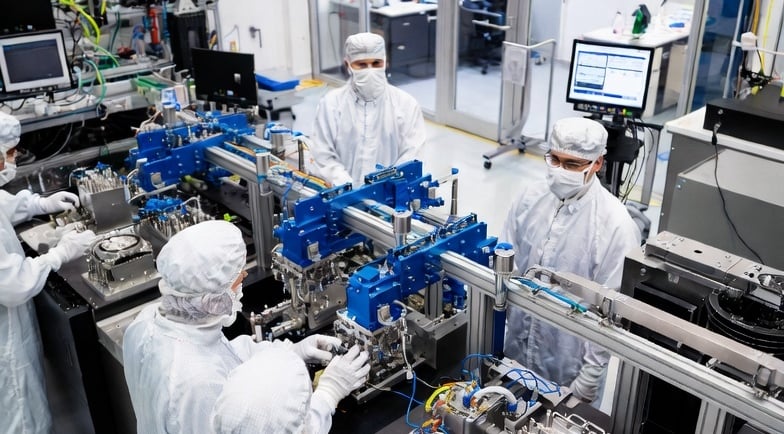
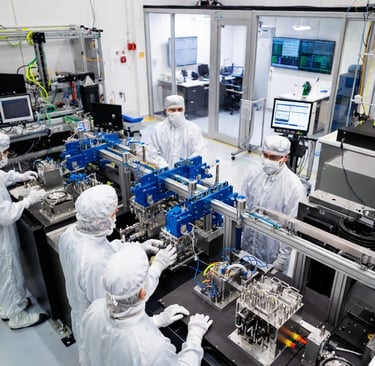
On March 10, 2026, Applied Materials — one of the world's leading suppliers of semiconductor manufacturing equipment — made two major announcements that sent ripples through the global tech and AI ecosystem. The company revealed long-term research and development (R&D) collaborations with two of the biggest names in memory chips: US-based Micron Technology and South Korea’s SK hynix. These partnerships are centered at Applied Materials' brand-new EPIC (Equipment and Process Innovation and Commercialization) Center in Silicon Valley, a massive $5 billion investment designed to speed up breakthroughs in advanced semiconductors. The focus of these deals is crystal clear: developing next-generation memory technologies specifically tailored for the exploding demands of artificial intelligence (AI) and high-performance computing (HPC). We're talking about advancements in DRAM (the everyday working memory in computers and devices), high-bandwidth memory (HBM) (the ultra-fast, high-capacity memory that's become essential for training and running large AI models), and energy-efficient 3D advanced packaging techniques that stack chips in innovative ways to boost performance while cutting power use. Engineers from Applied Materials, Micron, and SK hynix will work side-by-side at the EPIC Center, combining their expertise to tackle real-world challenges in materials engineering, process integration, and packaging. Micron's collaboration also links in its own state-of-the-art innovation hub in Boise, Idaho, strengthening the US-based semiconductor pipeline. SK hynix joins as a founding partner at the EPIC Center (along with earlier partner Samsung Electronics, announced in February 2026), creating a powerful alliance between a top equipment maker and two of the three dominant global DRAM/HBM producers. These announcements came just as AI infrastructure spending is projected to hit record levels — with Big Tech firms expected to pour at least $630 billion into data centers, chips, and related tech in 2026 alone. The timing couldn't be better, and the market reacted immediately: Applied Materials (NASDAQ: AMAT) shares rose about 2%, while Micron (NASDAQ: MU) jumped around 3% on the news. Why Memory Is the Real Bottleneck in Today's AI World To understand why this matters so much, let's break it down simply. AI models — like the ones powering ChatGPT, Gemini, Grok, Claude, and future frontier systems — keep getting bigger and more capable. A single large language model today can have hundreds of billions (or even trillions) of parameters. Training and running these models requires enormous amounts of compute power (mostly from Nvidia GPUs and similar accelerators), but the real limiting factor isn't just the processors anymore. It's memory — specifically, how fast and how much data the system can access quickly. DRAM handles everyday data access but isn't fast enough for massive AI workloads. HBM is stacked vertically (often 8–12 layers high) and sits right next to the GPU, delivering ultra-high bandwidth (terabytes per second) needed for AI training and inference. Demand for HBM has skyrocketed — SK hynix, Micron, and Samsung are all racing to produce more of it. But HBM is expensive, power-hungry, and hard to manufacture at scale. As models grow, data centers need more efficient, higher-capacity versions without exploding energy bills or costs. Power is another huge issue. AI data centers already consume massive electricity — equivalent to small countries in some cases. Every improvement in memory efficiency (lower power per bit, better heat management) translates to billions saved in operational costs and helps meet sustainability goals. Applied Materials doesn't make the memory chips themselves; it makes the equipment that Micron, SK hynix, Samsung, and others use to build them. By partnering directly at the EPIC Center, Applied gets deeper insight into future needs, while the memory makers get early access to cutting-edge tools, materials, and processes. This "co-innovation" model shortens the time from lab breakthrough to mass production — potentially by years. What the EPIC Center Actually Is and Why It's a Game-Changer The EPIC Center in Silicon Valley is Applied Materials' boldest move yet. Announced initially in 2023 and ramping up with partners like Samsung (February 2026), Micron, and SK hynix (March 2026), it's: A $5 billion+ investment — the largest single US commitment to advanced semiconductor equipment R&D ever. Over 180,000 square feet of state-of-the-art cleanroom space. Designed for collaborative work: chipmakers' engineers live and work alongside Applied's teams. Focused on speeding up the entire innovation cycle — from early research to high-volume manufacturing. Set to open later in 2026, with programs already underway. The goal? Reduce the traditional 5–10 year gap between inventing a new process/material and seeing it in real chips. For AI, where progress happens in months, not years, this acceleration is critical. With founding partners now including Samsung, Micron, and SK hynix — basically the entire top tier of memory production outside of niche players — the EPIC Center becomes a central hub for the global AI hardware supply chain. Global Ripple Effects: Supply Chain, Geopolitics, Costs, and Performance These partnerships have far-reaching implications: Strengthening the US-Asia AI Hardware Alliance Despite US-China tensions and export controls on advanced chips, these deals reinforce cooperation between US equipment leaders (Applied Materials) and Asian memory giants (SK hynix, Samsung, with Micron as the US anchor). This helps diversify and secure the supply chain away from over-reliance on any single region. Lower Costs and Better Performance Ahead Faster innovation in HBM and DRAM could bring down prices over time (after initial premium phases) while boosting specs — higher bandwidth, lower power, more capacity per stack. This benefits everyone: cloud providers (cheaper AI training), edge devices (smarter phones/cars), and even smaller companies building AI apps. Investor and Market Confidence The immediate stock jumps show Wall Street sees this as validation of sustained AI demand. Applied Materials positions itself as indispensable in the memory boom, while Micron and SK hynix gain competitive edges in the HBM race (where SK hynix currently leads). Energy and Sustainability Angle Emphasis on energy-efficient packaging and materials directly addresses AI's power crisis. Better memory efficiency means data centers can run more AI workloads without building new power plants. Geopolitical Resilience By anchoring advanced R&D in the US (with global partners), it reduces risks from supply disruptions and supports policies like the CHIPS Act, which aims to bring more semiconductor manufacturing home. In everyday terms: These partnerships mean the AI tools you use tomorrow — faster responses, smarter assistants, better image generation, autonomous driving — will run on more capable, efficient hardware sooner and potentially cheaper than if companies worked in silos. Looking Ahead: What's Next for AI Memory? The EPIC Center collaborations are long-term (multi-year programs), so expect steady announcements of process improvements, new materials, and HBM generations (HBM4, HBM5, etc.) in the coming years. With AI capex still surging, this positions Applied Materials, Micron, and SK hynix at the heart of the next phase of the AI revolution — shifting from "bigger models" to "smarter, more efficient infrastructure." This isn't just a corporate deal; it's a foundational step in making AI scalable, affordable, and sustainable for the world. References (Authentic Sources – March 2026 Coverage) Applied Materials Investor Relations – "Applied Materials and SK hynix Announce Long-Term R&D Partnership to Accelerate AI Memory Innovation at EPIC Center in Silicon Valley" (March 10, 2026) https://ir.appliedmaterials.com/news-releases/news-release-details/applied-materials-and-sk-hynix-announce-long-term-rd-partnership Applied Materials Investor Relations – "Applied Materials and Micron Partner To Advance U.S. Innovation in Next-Generation AI Memory Solutions" (March 10, 2026) https://ir.appliedmaterials.com/news-releases/news-release-details/applied-materials-and-micron-partner-advance-us-innovation-next Reuters – "Applied Materials forges partnerships with Micron and SK Hynix for AI memory chips" (March 10, 2026) https://www.reuters.com/technology/applied-materials-sk-hynix-partner-next-gen-ai-memory-development-2026-03-10/ TrendForce – "[News] Applied Materials Teams Up with Micron, SK hynix for Next-Gen DRAM, HBM and NAND Development" (March 11, 2026) https://www.trendforce.com/news/2026/03/11/news-applied-materials-teams-up-with-micron-sk-hynix-for-next-gen-dram-hbm-and-nand-development Yahoo Finance / Simply Wall St – "Applied Materials Deepens AI Memory Role With SK Hynix And Micron EPIC Deals" (March 11, 2026) https://finance.yahoo.com/news/applied-materials-deepens-ai-memory-111124339.html GuruFocus – "Applied Materials (AMAT) Partners with Micron (MU) and SK Hynix for Next-Gen AI Chips" (March 2026 coverage) These sources are based on official press releases and reputable financial/tech news outlets reporting directly from the March 10, 2026 announcements. Always verify with the latest company filings for ongoing developments.
3/11/20261 min read
My post content
Email-ibm.anshuman@gmail.com
© 2026 CodeForge AI | Privacy Policy |Terms of Service | Contact | Disclaimer | 1000 university college list|book library australia 2026|Latest AI Trends (Global & India 2026) 400 GLOBAL BOOK STORE WORLDWID|TOP 400 FREE BOOK LIBRARY USA|TOP 400 FREE BOOK LIBRARY INDIA|Audiobooks at Just ₹99 | $1.25| E-Books at Just ₹49 | $0.50| 50+ AI Expert Tutorials
All my books are exclusively available on Amazon. The free notes/materials on globalcodemaster.com do NOT match even 1% with any of my PUBLISHED BOoks. Similar topics ≠ same content. Books have full details, exercises, chapters & structure — website notes do not.No book content is shared here. We fully comply with Amazon policies.
🚀 Best content for SSC, CGL, LDC, TET, NET & SET preparation!
📚 Maths | Reasoning | GK | Previous Year Questions | Tips & Tricks
👉 Join our WhatsApp Channel now:
🔗 https://whatsapp.com/channel/0029Vb6kg2vFnSz4zknEOG1D...