Description
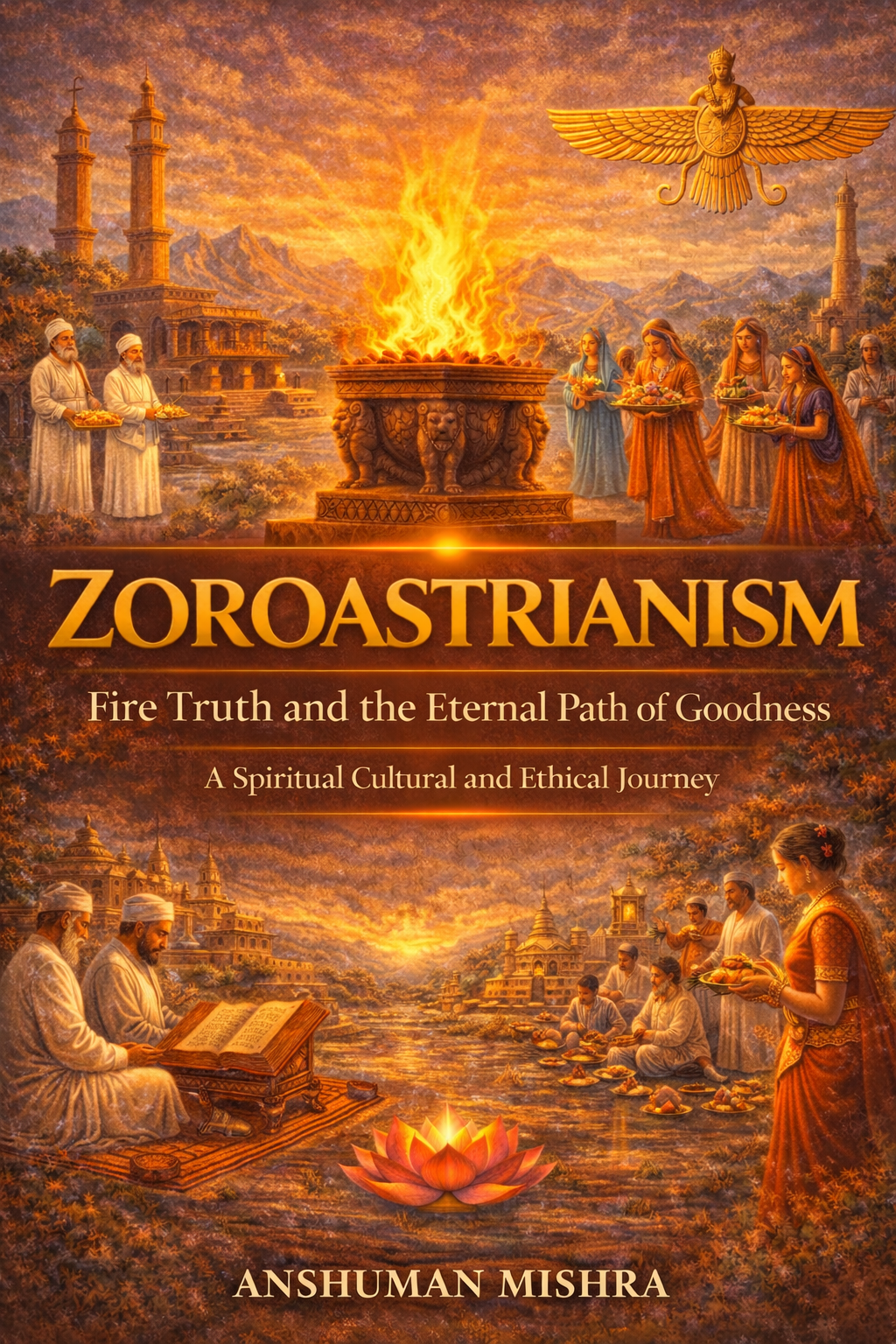
Zoroastrianism: Fire, Truth and the Eternal Path of Goodness
A Spiritual, Cultural and Ethical Journey
Zoroastrianism: Fire, Truth and the Eternal Path of Goodness is a comprehensive introduction to one of the world’s oldest continuing spiritual traditions. The book explores Zoroastrian philosophy, history, sacred literature, ethical principles, rituals, symbols, community life, festivals, environmental values, cultural heritage, and contemporary relevance.
At the heart of this tradition lies a powerful ethical vision: Good Thoughts, Good Words, Good Deeds. This principle provides a practical framework for understanding how individual choices, words, intentions, and actions can contribute to personal character and the wider moral life of society.
Written in a respectful, educational, and accessible style, this book presents Zoroastrianism as a living spiritual and ethical tradition rather than merely a subject of ancient history.
Discover the Foundations of Zoroastrianism
The book begins by introducing the meaning and essence of Zoroastrianism and its understanding as a way of life.
Readers explore its spiritual vision, moral purpose, emphasis on truth, and continuing relevance to questions of human responsibility and ethical living.
The opening chapters establish the idea that spirituality and morality are closely connected. Faith is presented alongside conscious thought, responsible action, and participation in society.
Explore the Ancient Origins
The historical development of Zoroastrianism is examined through the context of ancient Iran.
The book discusses:
- Ancient Iranian cultural background
- Early social and religious environments
- Development of Zoroastrian identity
- Historical continuity
- Preservation of religious traditions
This historical perspective helps readers understand the cultural environment in which Zoroastrian ideas developed and how the tradition continued across generations.
The Life and Teachings of Zoroaster
A dedicated chapter explores the life and spiritual mission of Zoroaster, also known as Zarathustra.
The discussion focuses on:
- His early life and spiritual awakening
- His religious and philosophical vision
- His teachings concerning truth and righteousness
- Moral choice and human responsibility
- His lasting spiritual legacy
The book presents Zoroaster’s teachings in an educational context, emphasizing the importance of ethical awareness, thoughtful choice, and the pursuit of righteousness.
The Avesta and Gathas
Sacred literature occupies a central position in Zoroastrian tradition.
The book introduces readers to the Avesta and discusses the significance of the Gathas, exploring their philosophical and ethical dimensions.
It also examines:
- Oral transmission
- Preservation of sacred knowledge
- Compilation and textual traditions
- Spiritual authority
- Philosophical themes
Readers gain a broader understanding of how religious communities preserve important teachings across centuries.
Asha: Truth, Order, and Righteousness
One of the key concepts explored in the book is Asha, traditionally associated with truth, righteousness, order, and the proper harmony of existence.
The book examines how this principle can be understood in relation to:
- Truthfulness
- Moral discipline
- Justice
- Personal responsibility
- Harmony
- Ethical decision-making
Asha is presented as an important concept for understanding the broader ethical vision of Zoroastrian thought.
Good Thoughts, Good Words, Good Deeds
The ethical triad of Good Thoughts, Good Words, Good Deeds forms one of the central themes of the book.
Rather than treating this principle as a simple slogan, the book explores its practical significance.
Readers can consider how conscious thoughts influence words, how words influence relationships, and how actions shape individual character and society.
The principle is discussed in relation to:
- Personal development
- Family life
- Social responsibility
- Compassion
- Character building
- Ethical conduct
- Community service
This makes the teaching particularly relevant to contemporary discussions of values and responsible citizenship.
Divine Wisdom and Spiritual Awareness
The book explores the concept of divine wisdom and the relationship between humanity and the divine.
It considers how Zoroastrian thought connects spiritual awareness with:
- Moral choice
- Wisdom
- Reason
- Responsibility
- Consciousness
- Ethical living
The discussion encourages readers to examine the relationship between faith, reason, and morality in a thoughtful manner.
Understanding the Sacred Fire
Fire is one of the most recognizable symbols associated with Zoroastrianism.
The book explains the significance of fire as a symbol of:
- Purity
- Light
- Wisdom
- Clarity
- Spiritual awareness
- Moral illumination
It also discusses the role of fire temples as places of worship, spiritual focus, community identity, and continuity.
The book presents the important distinction that sacred fire functions as a revered spiritual symbol within Zoroastrian religious practice rather than simply being understood as an object of worship.
Sacred Symbols and Cultural Identity
Zoroastrianism has a rich symbolic tradition.
The book introduces readers to important symbols and examines their ethical and cultural meanings.
Symbols are presented as tools for reflection that can communicate ideas about:
- Responsibility
- Progress
- Moral choice
- Identity
- Spiritual development
- Ethical living
This section also explores the relationship between symbolism and cultural continuity.
Prayer, Ritual, and Daily Practice
Zoroastrian spiritual life includes prayer, discipline, ritual practices, and ethical awareness.
The book explores the role of:
- Daily prayer
- Ritual purity
- Mindfulness
- Spiritual discipline
- Devotion
- Reflection
- Gratitude
The emphasis is on understanding the connection between external practices and inner ethical development.
Sacred Places and Fire Temples
The book introduces readers to Zoroastrian sacred geography, with particular attention to Yazd and the role of fire temples.
These locations are explored not only as religious spaces but also as important centers of cultural identity and continuity.
The book examines pilgrimage, sacred spaces, communal worship, and the preservation of heritage.
Community and Social Life
Zoroastrianism has developed strong traditions of community participation and social responsibility.
The book explores:
- Family values
- Community cooperation
- Education
- Moral upbringing
- Social harmony
- Service
- Cultural continuity
Readers gain insight into how ethical principles can influence both personal relationships and wider community life.
Zoroastrianism in Iran, India, and the World
The book explores the global presence of Zoroastrian communities.
Special attention is given to:
- Zoroastrianism in Iran
- Zoroastrian communities in India
- The Parsi heritage
- Global diaspora
- Cultural preservation
- Community identity
The discussion highlights how Zoroastrian communities have maintained their traditions while contributing to the societies in which they live.
Festivals and Celebrations
Festivals provide opportunities for remembrance, gratitude, renewal, and community participation.
The book explores Navroz/Nowruz and other seasonal and religious celebrations, examining their relationship with:
- Renewal
- Nature
- Gratitude
- Community
- Cultural heritage
- Spiritual reflection
These celebrations are presented as important expressions of both religious and cultural identity.
Food, Hospitality, and Ethical Living
Food traditions are explored within their broader cultural and ethical context.
The book discusses themes such as:
- Cleanliness
- Moderation
- Hospitality
- Sharing
- Gratitude
- Community
- Cultural expression
Food is presented not simply as nourishment but also as an important element of cultural continuity and social connection.
Dress, Art, Music, and Storytelling
Zoroastrian cultural heritage extends beyond religious practices.
The book explores:
- Traditional attire
- Art and craftsmanship
- Music
- Storytelling
- Cultural symbols
- Heritage preservation
These forms of cultural expression help transmit identity, values, stories, and traditions from one generation to another.
Environmental Ethics and Respect for Nature
One of the particularly relevant themes of this book is the Zoroastrian relationship with the natural world.
The tradition’s reverence for elements such as:
- Earth
- Water
- Air
- Fire
is explored in relation to cleanliness, responsibility, balance, and environmental awareness.
The book considers how ethical approaches toward nature can contribute to contemporary discussions about environmental responsibility and sustainability.
Education, Work, and Social Contribution
The book explores education and honest work as important components of responsible living.
Knowledge is presented as a means of intellectual and moral development, while honest labor is connected with dignity, responsibility, and social contribution.
Readers will discover how Zoroastrian ethical principles can be connected with:
- Education
- Professional integrity
- Honest work
- Service
- Social responsibility
- Community development
Famous Zoroastrian Personalities
The book also highlights the contributions of notable Zoroastrian personalities.
Leaders, scholars, reformers, scientists, industrialists, philanthropists, and cultural contributors are discussed as examples of how members of a relatively small community have made significant contributions to wider society.
Their stories provide examples of:
- Integrity
- Leadership
- Knowledge
- Innovation
- Service
- Social responsibility
Zoroastrianism in the Modern World
The final chapter examines the continuing relevance of Zoroastrianism in contemporary society.
Key themes include:
- Cultural preservation
- Youth education
- Community continuity
- Global citizenship
- Ethical responsibility
- Modern identity
- Intercultural understanding
The book considers how ancient ethical principles can remain meaningful in a rapidly changing world.
Who Should Read This Book?
This book is suitable for:
- Students of religion and philosophy
- University and college students
- Researchers and educators
- Readers interested in ancient religions
- Readers interested in Iranian history and culture
- Readers interested in Parsi and Zoroastrian heritage
- Spiritual seekers
- Students of comparative religion
- Readers interested in ethics and morality
- General readers interested in world civilizations
What Makes This Book Valuable?
Zoroastrianism: Fire, Truth and the Eternal Path of Goodness brings together spiritual philosophy, history, ethics, sacred literature, cultural traditions, community life, environmental awareness, and modern relevance.
Its central ethical message encourages readers to reflect on the relationship between thought, speech, and action.
The book also demonstrates that studying an ancient tradition can provide valuable insights into contemporary questions surrounding:
- Moral responsibility
- Environmental care
- Social harmony
- Honest work
- Personal integrity
- Cultural preservation
- Responsible citizenship
Key Topics Covered
Zoroastrianism • Zoroaster • Zarathustra • Avesta • Gathas • Asha • Good Thoughts Good Words Good Deeds • Zoroastrian Philosophy • Zoroastrian Ethics • Sacred Fire • Fire Temples • Zoroastrian Symbols • Faravahar • Zoroastrian Prayers • Zoroastrian Festivals • Navroz • Parsi Heritage • Zoroastrians in India • Ancient Iran • Zoroastrian Culture • Zoroastrian History • Environmental Ethics • Zoroastrian Community • Spirituality • Truth and Righteousness • Ethical Living • Iranian Heritage • World Religions
A Journey from Ancient Wisdom to Modern Life
At its heart, Zoroastrianism: Fire, Truth and the Eternal Path of Goodness is a journey into a tradition centered on truth, moral responsibility, wisdom, and the conscious choice to contribute positively to the world.
From the teachings of Zoroaster and the wisdom of the Gathas to sacred fire, community traditions, festivals, environmental responsibility, and modern global identity, the book provides readers with a broad and accessible introduction to Zoroastrianism.
It invites readers not simply to learn about an ancient faith, but to understand the ethical ideas that have helped sustain its identity across generations.
Discover the history. Explore the philosophy. Understand the symbols. Learn about the culture. And reflect on the timeless principle of Good Thoughts, Good Words, and Good Deeds.





Reviews
There are no reviews yet.