Description
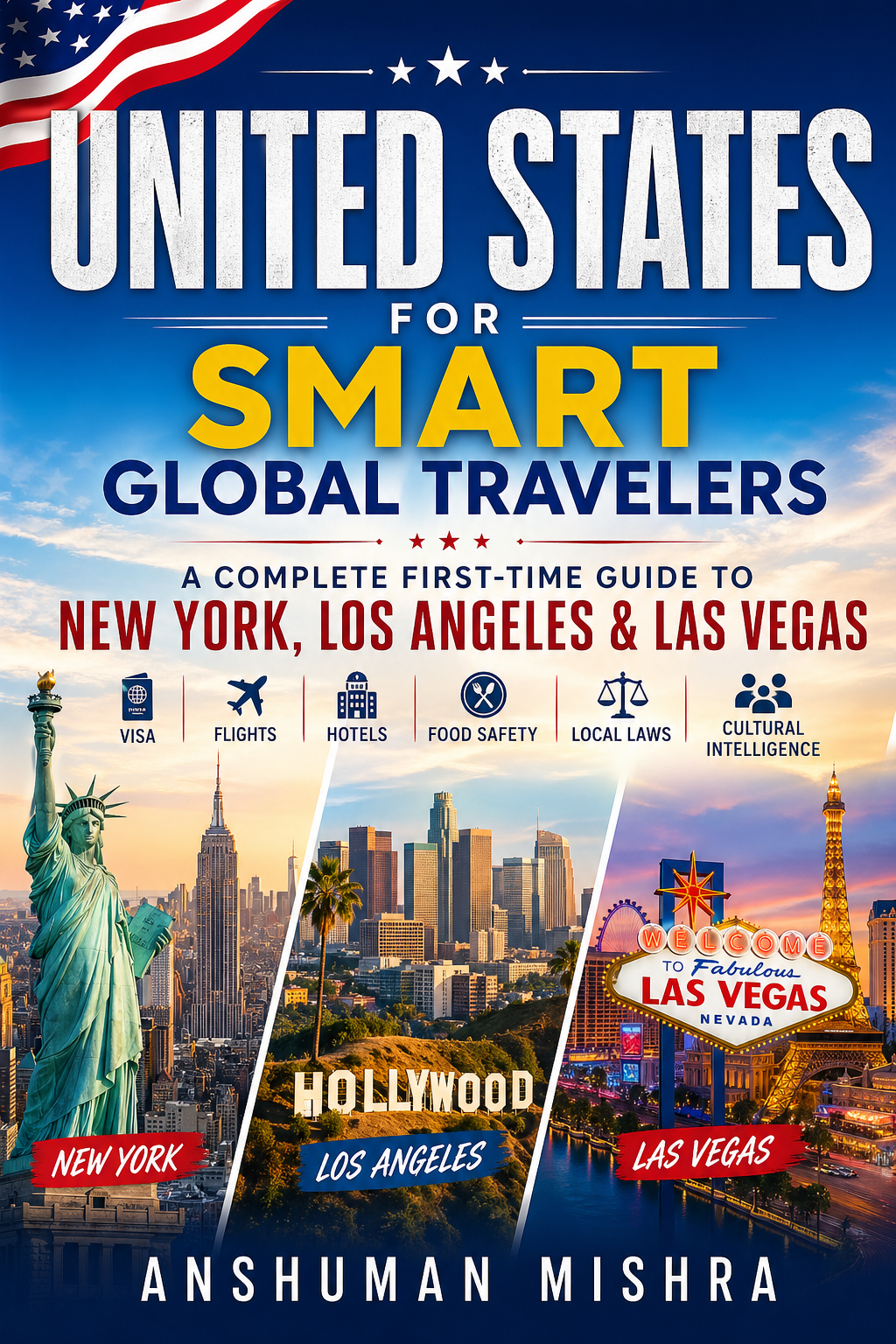
A Complete First-Time Guide to New York, Los Angeles & Las Vegas – Visa, Flights, Hotels, Food, Safety, Local Laws & Cultural Intelligence
Traveling to the United States for the first time can be exciting, but it can also be complicated.
The country is geographically enormous, culturally diverse, technologically advanced, and governed by a combination of federal, state, and local rules. A traveler who understands the basic systems before arriving can avoid many of the problems that first-time visitors commonly encounter.
United States for Smart Global Travelers has been created as a practical and accessible guide for international travelers who want to understand not only where to go, but also how to travel intelligently in America.
This book combines travel planning, immigration awareness, financial preparation, transportation guidance, cultural intelligence, safety awareness, and practical travel strategies into one structured resource.
More Than a Tourist Guide
Traditional travel guides often concentrate primarily on famous attractions.
This book takes a broader approach.
It asks important practical questions:
How should you prepare for a U.S. visa interview?
What should you expect at an American airport?
How does tipping work?
How much should you budget?
Should you rent a car or use public transportation?
What happens if you need medical treatment?
What local laws should tourists understand?
How can you avoid common scams and unnecessary expenses?
How should visitors communicate respectfully across different American cultures?
These are the questions that can make the difference between a stressful trip and a successful one.
Major Destinations Covered
The book focuses particularly on three internationally famous destinations:
New York
New York is one of the world’s most recognizable cities and a major gateway for international visitors.
The guide introduces travelers to practical considerations involving:
- Accommodation
- Transportation
- Sightseeing
- Public behavior
- Food
- Safety
- Budget planning
- City navigation
From iconic landmarks to everyday travel logistics, readers learn how to approach New York as a first-time visitor.
Los Angeles
Los Angeles offers a very different travel experience.
Its enormous geographical spread, extensive road network, entertainment industry, diverse neighborhoods, and car-oriented travel environment require a different planning strategy.
The book explains considerations related to:
- Hotel location
- Car rental
- Ride-sharing
- Public transportation
- Attractions
- Entertainment
- Food
- Traffic
- Travel time
- Personal safety
Las Vegas
Las Vegas is famous for entertainment, hospitality, resorts, shows, dining, and nightlife.
For travelers, however, it is important to understand that Las Vegas has its own rules, costs, transportation patterns, and visitor environment.
The book focuses on responsible tourism, accommodation planning, transportation, entertainment budgeting, public behavior, and safety.
Chapter 1: Understanding the United States as a Traveler
The United States cannot be understood as a single uniform culture.
Different states and cities can have different:
- Laws
- Weather conditions
- Social customs
- Transportation systems
- Costs
- Cultural characteristics
The opening chapter introduces readers to American diversity and explains why international travelers should avoid relying only on stereotypes or movie-based expectations.
It also explains the importance of:
- Time zones
- Large travel distances
- Regional differences
- Cultural diversity
- Lifestyle differences
- Travel planning
Chapter 2: Choosing the Best Time to Visit
The United States covers a huge geographical area, so weather varies dramatically.
Travel conditions can range from winter snow to extreme summer heat depending on the destination and season.
The book discusses:
- Seasonal travel
- Peak tourist periods
- Budget travel periods
- Luxury travel periods
- Holiday travel
- Festival planning
- Heat
- Snow
- Storm risks
- Hurricane considerations in relevant regions
Rather than suggesting one universal “best time,” the book encourages travelers to select dates according to their destination, budget, activities, and personal preferences.
Chapter 3: Flight Booking Intelligence
Long-haul flights to the United States can represent a major part of a travel budget.
This chapter explains:
- Economy class
- Premium economy
- Business class
- Direct flights
- Connecting flights
- Multi-city itineraries
- Airline baggage policies
- Additional charges
- Flight timing
- Budget planning
The emphasis is on comparing the complete cost and convenience of a journey, rather than simply choosing the cheapest advertised fare.
Chapter 4: U.S. Tourist & Business Visa
Visa preparation is one of the most important parts of planning a trip to the United States.
The book provides an educational overview of:
- B1/B2 visa concepts
- Online application preparation
- Interview preparation
- Supporting documentation
- Common application mistakes
- Visa validity
- Entry considerations
The book promotes honest, accurate, and compliant applications rather than shortcuts or misleading strategies.
Because immigration requirements can change, travelers should always verify current information through official U.S. government sources before submitting an application.
Chapter 5: Immigration, Customs & Airport Procedures
Arriving at a U.S. airport can feel intimidating for first-time visitors.
This chapter explains what travelers should generally understand about:
- Immigration questioning
- Customs declarations
- Restricted items
- Baggage inspections
- Electronic-device considerations
- Secondary inspection
- Traveler responsibilities
- Airport procedures
The objective is to help travelers approach the arrival process with realistic expectations rather than unnecessary fear.
Chapter 6: Money, Cards & Tipping
Understanding American payment culture is essential.
The book discusses:
- U.S. dollar basics
- Cash
- Credit cards
- Debit cards
- International cards
- ATM usage
- Foreign transaction fees
- Currency exchange
- Digital payments
- Tipping culture
Tipping can be particularly confusing for international visitors.
The book explains the concept of tipping in common service situations so travelers can better understand expectations and avoid awkward situations.
Chapter 7: SIM Cards, eSIM & Digital Connectivity
Staying connected is essential when traveling internationally.
The book explores:
- Tourist SIM cards
- eSIM options
- Airport purchases
- Online purchases
- Local mobile plans
- Roaming
- Internet coverage
- Emergency communication
- Staying connected with family
Travelers can use these considerations to select connectivity options according to their trip length and usage requirements.
Chapter 8: Hotels from Budget to Luxury
Accommodation can significantly affect the cost and convenience of a U.S. trip.
The book explains how to compare:
- Budget hotels
- Mid-range properties
- Premium hotels
- Five-star hotels
- Location
- Reviews
- Transportation access
- Additional charges
- Check-in requirements
- Resort and property fees where applicable
The guide also discusses common accommodation-related risks, including misleading pricing and unsuitable locations.
Chapter 9: Transportation Across America
Transportation is one of the biggest differences between traveling in the United States and traveling in many compact European destinations.
The book compares:
Domestic Flights
Useful for long distances between major cities.
Trains
Useful on selected routes and corridors.
Buses
Potentially useful for budget-oriented intercity travel.
Rental Cars
Especially relevant in destinations where public transportation may be limited.
Ride-Sharing
Services such as Uber and Lyft can be convenient in many urban areas.
Public Transportation
Major cities such as New York have extensive public transit networks.
The book helps readers think about transportation according to distance, cost, convenience, safety, and destination.
Chapter 10: American Food & Dietary Requirements
The United States has one of the world’s most diverse food cultures.
Visitors can find:
- American cuisine
- Vegetarian food
- Vegan food
- Jain-friendly options
- Halal food
- Kosher food
- Indian restaurants
- Asian cuisine
- Mexican cuisine
- European cuisine
- International restaurants
- Fast food
- Fine dining
The chapter also discusses:
- Food allergies
- Restaurant communication
- Portion sizes
- Tipping
- Dining etiquette
- Dietary restrictions
Chapter 11: Sightseeing & Experiences
The United States offers an enormous variety of attractions.
The book discusses:
- Famous landmarks
- Museums
- City attractions
- Scenic destinations
- Nature experiences
- Free attractions
- City passes
- Premium experiences
- Guided tours
- Photography considerations
Readers are encouraged to plan sightseeing according to their available time instead of attempting to see everything.
Chapter 12: Tour Packages & Smart Selection
Not every traveler benefits from the same type of tour.
The book compares:
Group Tours vs Private Tours
Online Operators vs Local Operators
Budget Packages vs Premium Experiences
Organized Tours vs Independent Travel
Readers learn how to compare:
- Total price
- Inclusions
- Transportation
- Hotel category
- Meals
- Guide services
- Cancellation conditions
- Hidden charges
The book also introduces sample approaches for budget and premium itineraries.
Chapter 13: Local Laws & Tourist Responsibilities
One of the most important lessons for international travelers is that laws can differ across states and municipalities.
The book discusses general awareness regarding:
- Alcohol regulations
- Smoking restrictions
- Drug laws
- Public behavior
- Photography
- Privacy
- Police interaction
- Traffic rules
- Local regulations
Because laws can change and vary by location, readers are encouraged to verify the current rules applicable to their specific destination.
Chapter 14: Safety, Crime & Scam Prevention
No major travel destination is completely free from risk.
This chapter focuses on practical prevention rather than fear.
Readers learn about:
- Common tourist scams
- Protecting passports
- Protecting money
- Hotel safety
- Public transportation awareness
- Nighttime travel considerations
- Emergency situations
- Reporting crime
- Solo travel awareness
- Female traveler safety
The objective is simple:
Stay aware without becoming unnecessarily afraid.
Chapter 15: Health, Insurance & Emergencies
Medical treatment in the United States can be expensive, making travel insurance particularly important for many international visitors.
The chapter covers:
- Travel insurance
- Medical expenses
- Hospitals
- Emergency care
- Pharmacies
- Medicines
- Prescriptions
- Health preparation
- Emergency planning
Readers are encouraged to understand their insurance coverage before departure and keep important medical and travel information accessible.
Chapter 16: Cultural Intelligence & American Etiquette
Traveling successfully is not only about knowing the destination.
It is also about understanding people.
The book introduces readers to common aspects of American social interaction, including:
- Greetings
- Communication
- Personal space
- Diversity
- Tipping
- Workplace etiquette
- Customer-service culture
- Respect for different beliefs
- Social boundaries
America is highly diverse, and there is no single behavior that represents every American.
The goal is therefore not to memorize stereotypes, but to develop cultural awareness and adaptability.
Chapter 17: Packing & Final Preparation
Before departure, travelers should organize their documents and essential belongings carefully.
The book provides a practical checklist covering:
- Passport
- Visa
- Flight details
- Hotel confirmation
- Travel insurance
- Financial cards
- Emergency contacts
- Clothing
- Electronics
- Power adapters
- Medicines
- Personal items
- Luggage
The chapter concludes with an airport-day checklist designed to reduce last-minute stress.
Chapter 18: First-Time Global Traveler Wisdom
The final chapter brings the entire travel philosophy together.
Readers learn how to:
- Avoid common first-time mistakes
- Travel with confidence
- Manage expenses
- Reduce travel stress
- Stay alert
- Respect local culture
- Handle unexpected situations
- Become more independent travelers
The ultimate goal is to develop the mindset of a smart global traveler.
Budget Travel vs Luxury Travel
The book does not assume that every visitor has the same travel budget.
Budget Travelers
The guide explores:
- Affordable accommodation
- Public transportation
- Budget food
- Advance planning
- Free attractions
- Cost comparison
- Smart itinerary design
Luxury Travelers
Premium travelers can use the guide to evaluate:
- Five-star hotels
- Business-class flights
- Private tours
- Premium transportation
- Fine dining
- Exclusive experiences
The book emphasizes that luxury should be based on value and experience, not simply price.
Who Should Read This Book?
United States for Smart Global Travelers is ideal for:
- First-time visitors to the USA
- International tourists
- Indian travelers
- Asian travelers
- European travelers
- African travelers
- Middle Eastern travelers
- Families
- Students
- Professionals
- Business visitors
- Solo travelers
- Female travelers
- Budget travelers
- Luxury tourists
- Senior travelers
What You Will Learn
After working through this guide, readers will have a structured understanding of:
- U.S. travel planning
- Tourist visa preparation
- B1/B2 visa basics
- Flight booking
- Airport arrival
- Immigration procedures
- Customs awareness
- U.S. currency
- Tipping culture
- SIM and eSIM planning
- Hotel selection
- Car rental considerations
- Public transportation
- Food and dietary requirements
- Major sightseeing
- Tour packages
- Local laws
- Safety planning
- Travel insurance
- Emergency preparation
- Cultural etiquette
- Packing
- First-time international travel
What Makes This Book Different?
Practical
It focuses on real travel decisions rather than simply listing attractions.
First-Time Friendly
The explanations are designed for readers who may have limited international travel experience.
Comprehensive
The book covers the journey from visa preparation to final airport departure.
Culturally Aware
It encourages visitors to respect America’s diverse communities, traditions, and social environments.
Safety Conscious
It provides practical awareness without unnecessarily frightening travelers.
Budget + Luxury
Both economical and premium travel approaches are included.
Travel Smart, Not Just Travel Far
The United States offers extraordinary possibilities.
You can experience the energy of New York, the creative culture of Los Angeles, and the entertainment atmosphere of Las Vegas—but each destination requires a different travel strategy.
The most successful international travelers are not necessarily those who spend the most money.
They are the travelers who:
Plan carefully.
Understand the rules.
Respect local culture.
Manage their money wisely.
Stay aware of their surroundings.
Remain flexible when plans change.
Final Perspective
United States for Smart Global Travelers is designed to transform the first-time visitor’s experience from uncertainty into preparation.
It is a guide for travelers who want more than photographs.
It is for people who want to understand the destination they are visiting.
From visa preparation and airport immigration to hotels, transportation, food, sightseeing, safety, local laws, cultural etiquette, and final packing, the book provides a structured roadmap for navigating the United States.
Whether your dream is to walk through New York City, explore Los Angeles, experience Las Vegas, attend a business meeting, visit family, or begin your first major international journey, this guide provides a practical foundation for making informed decisions.




Reviews
There are no reviews yet.