Description
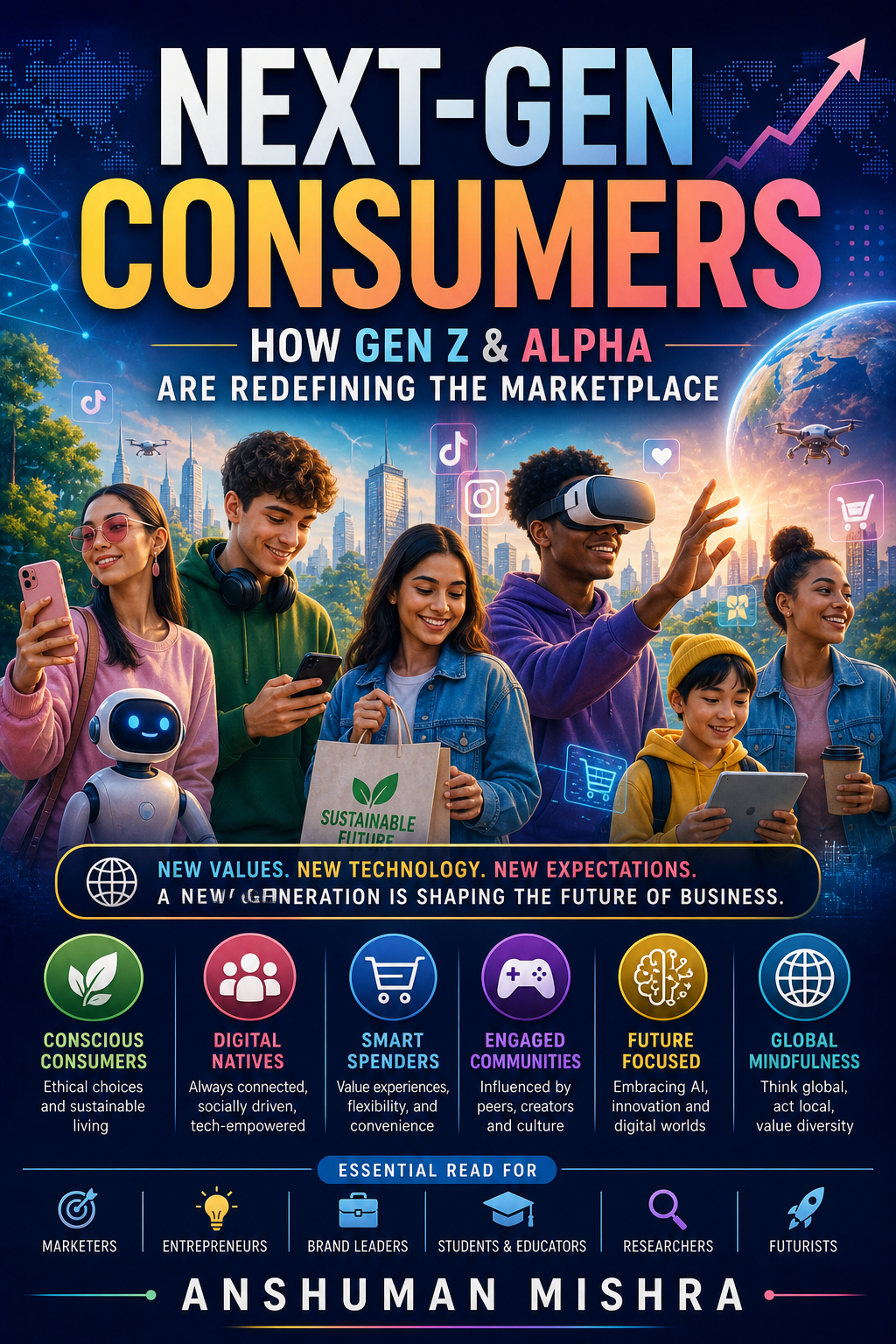
Next-Gen Consumers: How Gen Z & Alpha Are Redefining the Marketplace
The marketplace is changing because the consumer is changing.
Generation Z and Generation Alpha are growing up in an environment shaped by smartphones, social media, streaming platforms, online communities, artificial intelligence, gaming, digital payments, creator culture, and rapidly evolving technology.
These generations do not simply consume products. They interact with brands, create content, build communities, influence trends, evaluate corporate values, and increasingly expect personalized and seamless digital experiences.
Next-Gen Consumers: How Gen Z & Alpha Are Redefining the Marketplace explores the forces shaping these emerging consumer groups and examines how businesses, marketers, retailers, educators, and entrepreneurs can understand the marketplace of the future.
The book brings together perspectives from consumer behavior, digital marketing, technology, culture, e-commerce, social media, sustainability, identity, and emerging business models.
Chapter 1: Understanding Gen Z and Gen Alpha
The book begins by examining who Gen Z and Gen Alpha are and how their formative experiences differ from those of previous generations.
Topics include:
- Defining Gen Z and Gen Alpha
- Generational values
- Life milestones
- Digital-native behavior
- Social consciousness
- Global identity
- Differences from Millennials
Rather than treating generations as homogeneous groups, the chapter provides a framework for understanding broad behavioral patterns while recognizing differences within each generation.
Chapter 2: The Digital DNA of New Consumers
For younger consumers, digital platforms are not simply communication tools—they can also be places for discovery, entertainment, identity formation, community, and commerce.
This chapter explores:
- Social media and identity
- Digital communities
- Influencers
- User-generated content
- Gaming ecosystems
- Virtual environments
- Short-form video
- The attention economy
The growing influence of platforms such as TikTok, Instagram Reels, YouTube Shorts, and other digital ecosystems is examined from a consumer-behavior perspective.
Chapter 3: Purchasing Power and Spending Patterns
The way younger consumers participate in the economy is changing.
This chapter examines:
- Early financial independence
- Side hustles
- Digital wallets
- Pocket money and allowances
- Subscription-based services
- Alternative payment systems
- Ownership versus access
- Impulsive and high-involvement purchases
The chapter also examines how family structures and digital financial tools influence purchasing behavior.
Chapter 4: The Ethical and Conscious Consumer
Younger consumers increasingly encounter brands through conversations about sustainability, social responsibility, identity, privacy, and corporate behavior.
This chapter explores:
- Sustainability
- Eco-conscious consumption
- Ethical fashion
- Plant-based products
- Animal welfare
- Brand transparency
- Authenticity
- Social responsibility
- Privacy
- Data ethics
It also examines how public reactions on social platforms can rapidly influence brand reputation.
Chapter 5: Influences That Shape Buying Decisions
Consumers rarely make decisions in isolation.
For Gen Z and Gen Alpha, purchasing decisions can be influenced by:
- Friends and peers
- Social media trends
- Influencers
- Online communities
- Parents
- Schools and institutions
- Viral content
- FOMO
- FOBO
Particular attention is given to the Gen Alpha family unit, where parents may play a significant role in purchasing decisions even when children strongly influence product discovery and preferences.
Chapter 6: Regional and Cultural Differences
The next generation of consumers is increasingly exposed to global culture, but local traditions and cultural identities remain important.
This chapter compares:
- Global youth culture
- Local consumer traditions
- Urban and rural behavior
- Emerging markets
- Western markets
- Language differences
- Localization
- Cultural nuance
Examples from markets such as India, Brazil, Indonesia, Nigeria, the United States, the United Kingdom, Germany, and Japan help illustrate why a global youth trend does not necessarily produce identical consumer behavior everywhere.
Chapter 7: The Technology Behind Consumer Trends
Technology increasingly shapes how consumers discover, evaluate, purchase, and interact with products.
This chapter explores:
- Mobile-first behavior
- Apps
- AI personalization
- Recommendation algorithms
- Predictive analytics
- Augmented Reality
- Virtual try-on
- Blockchain
- Digital ownership
- Voice search
- Smart assistants
- Internet of Things
The chapter demonstrates how technology is transforming the relationship between consumers and brands.
Chapter 8: Shopping Channels of the Future
The traditional separation between shopping, entertainment, and social interaction is becoming less clear.
This chapter examines emerging commerce models such as:
- Social commerce
- In-app shopping
- Virtual stores
- Immersive shopping
- Omnichannel retail
- Live commerce
- Influencer-led commerce
- Subscription commerce
- Low-friction purchasing experiences
The focus is on how businesses can create seamless journeys across physical and digital touchpoints.
Chapter 9: Brand Loyalty in the Next Generation
Brand loyalty is increasingly influenced by experiences, communities, values, and participation.
This chapter explores:
- Experience-driven branding
- Loyalty programs
- Community building
- Gamification
- Rewards
- Brand reputation
- Consumer activism
- Co-creation
It also examines why younger consumers may quickly shift their attention when a brand fails to meet their expectations.
Chapter 10: Education, Career, and Aspiration as Consumption Drivers
Consumption is closely connected to people’s aspirations and future goals.
This chapter explores:
- Education technology
- Learning platforms
- Career aspirations
- Technology careers
- Creativity
- Freelancing
- Entrepreneurship
- Content creation
- Influencer culture
- Purpose-driven work
- Emerging jobs
Education and career platforms are increasingly becoming brands themselves, influencing how younger consumers learn, build skills, and imagine their future.
Chapter 11: Family, Gender, and Identity
Identity plays an important role in how consumers interact with products, media, and brands.
This chapter examines:
- Inclusive branding
- Representation
- Family influence
- Gen Alpha purchasing dynamics
- Identity expression
- Diversity
- Gender representation
- Toys and media
- Fashion and changing cultural norms
The chapter encourages marketers to approach identity-related communication with cultural awareness and respect rather than reducing complex identities to marketing categories.
Chapter 12: Health, Wellness, and Self-Care
Health and wellness have become significant areas of interest for younger consumers.
This chapter explores:
- Fitness applications
- Wearable technology
- Digital wellness
- Mental-health platforms
- Skincare
- Beauty
- Journaling
- Meditation
- Digital detox
- Food and identity
- Plant-based and organic products
- Telehealth
- AI-enabled health technologies
The discussion also considers the importance of responsible communication when marketing health-related products and services.
Chapter 13: Entertainment, Streaming, and Media Consumption
Entertainment is one of the most powerful influences on consumer culture.
This chapter examines:
- Streaming platforms
- Binge culture
- Short-form video
- Long-form content
- Fan communities
- Fandoms
- Participatory storytelling
- Creator culture
- Music
- Podcasts
- Digital media
Consumers increasingly move between being audiences, creators, commentators, and communities.
This transformation has major implications for entertainment brands and marketers.
Chapter 14: Marketing to Next-Generation Consumers
Marketing to Gen Z and Gen Alpha requires more than traditional advertising.
This chapter explores:
- Storytelling
- Narrative-driven campaigns
- Nano influencers
- Micro influencers
- AI-powered personalization
- Authentic communication
- Ethical persuasion
- Digital experiences
- Real-time feedback
- Viral trends
The chapter emphasizes the importance of listening to consumers and adapting quickly rather than relying exclusively on one-way promotional communication.
Chapter 15: The Future of Global Consumerism
The final chapter looks beyond today’s consumer landscape and examines possible future scenarios.
Key questions include:
- Will younger consumers become increasingly global?
- How will climate concerns influence consumption?
- Could ownership give way to more shared-access models?
- How might AI-generated identities influence commerce?
- Could virtual or synthetic consumers become part of future marketplaces?
- How should businesses prepare for unpredictable consumer behavior?
The chapter concludes with an important strategic principle:
Future-ready businesses will need to be adaptable, culturally aware, technologically capable, and continuously connected to changing consumer expectations.
Key Topics Covered
- Gen Z Consumer Behavior
- Gen Alpha Consumer Behavior
- Next-Generation Consumers
- Digital Natives
- Consumer Psychology
- Digital Consumer Culture
- Social Media Marketing
- Influencer Marketing
- User-Generated Content
- Creator Economy
- Gaming and Consumer Culture
- Short-Form Content
- Digital Payments
- Subscription Economy
- Sustainable Consumption
- Ethical Consumerism
- Brand Authenticity
- Consumer Privacy
- AI Personalization
- Augmented Reality
- Social Commerce
- Live Commerce
- Omnichannel Retail
- Brand Loyalty
- Gamification
- Community Building
- Inclusive Branding
- Wellness Consumption
- Streaming Culture
- Future Consumer Trends
- Digital Commerce
Why This Book Matters
The next generation of consumers will influence the future of retail, entertainment, technology, education, fashion, finance, food, healthcare, and countless other industries.
Businesses that understand these consumers can design better products, communicate more effectively, build stronger communities, and create experiences that match evolving expectations.
But understanding Gen Z and Gen Alpha requires more than tracking viral trends.
It requires understanding the deeper forces behind their behavior:
Technology + Culture + Identity + Community + Values + Convenience + Experience
This book brings these dimensions together to create a comprehensive picture of the emerging consumer marketplace.
Who Should Read This Book?
Next-Gen Consumers is particularly useful for:
- Marketing professionals
- Brand managers
- Entrepreneurs
- Startup founders
- Retail professionals
- E-commerce businesses
- Digital marketers
- Consumer researchers
- Advertising professionals
- Business students
- Management students
- Product managers
- Social media strategists
- Educators and researchers
- Anyone interested in future consumer trends
Understanding the Consumer of Tomorrow
The marketplace of tomorrow will not be shaped only by technology.
It will be shaped by people who use that technology in new ways.
Gen Z and Gen Alpha are growing up in a world where a product can be discovered through a video, discussed in a community, reviewed by a creator, experienced through augmented reality, purchased inside an app, and shared with thousands of people within minutes.
This creates both enormous opportunities and new challenges for businesses.
Next-Gen Consumers: How Gen Z & Alpha Are Redefining the Marketplace provides a roadmap for understanding this transformation and preparing for the next era of global consumerism.
Understand the new consumer. Adapt to the new marketplace. Build for the future.




Reviews
There are no reviews yet.