Description
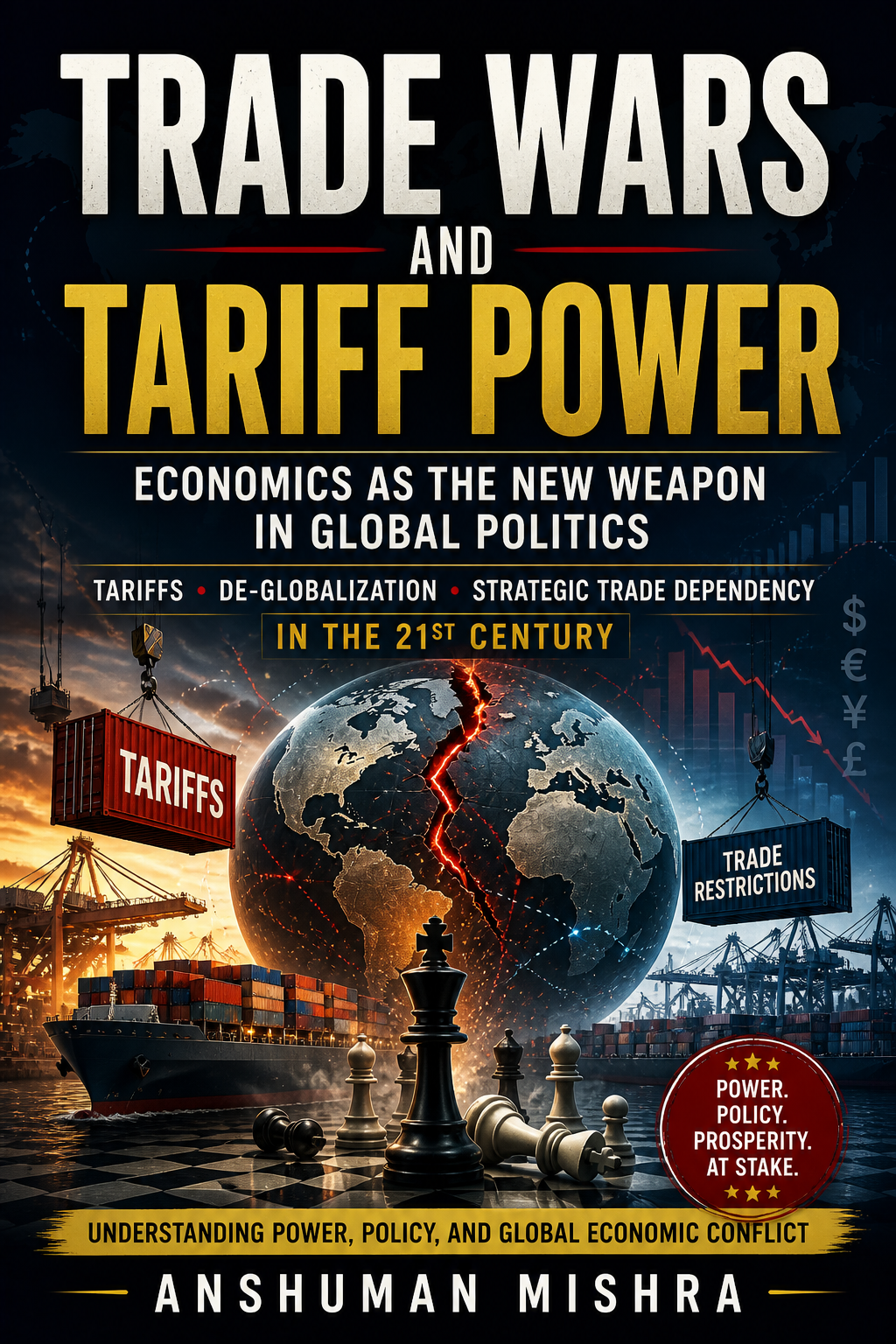
Trade Wars and Tariff Power: Economics as the New Weapon in Global Politics
Tariffs, De-Globalization, and Strategic Trade Dependency in the 21st Century
International power is no longer measured only by military strength.
In an increasingly interconnected global economy, access to markets, control over critical resources, supply chains, technology, financial systems, currencies, and strategic industries can create significant geopolitical influence.
Trade Wars and Tariff Power: Economics as the New Weapon in Global Politics explores the transformation of economic relations into instruments of strategic competition.
The book examines how tariffs, sanctions, export controls, industrial policies, supply-chain dependencies, currency power, and trade agreements influence relations between countries and reshape the global economic order.
Rather than treating trade as purely an economic subject, this book approaches it through the combined perspectives of international economics, political economy, international relations, geopolitics, trade policy, business strategy, and economic security.
Chapter 1: From Military Conflict to Economic Warfare
The book begins by examining how the nature of international power has evolved.
Topics include:
- Changing concepts of power
- Economic instruments in international relations
- Trade policy as strategic leverage
- Economic coercion
- National security and economic policy
- The relationship between economic and geopolitical competition
The chapter explores why major powers increasingly use economic tools alongside traditional diplomatic and security instruments.
Chapter 2: Historical Origins of Trade Wars
Trade conflicts are not a new phenomenon.
This chapter traces their development through:
- Mercantilism
- Historical trade rivalries
- Protectionism
- The interwar period
- Post–World War II liberalization
- Cold War trade restrictions
- Lessons from historical trade conflicts
Understanding the history of protectionism helps explain why countries sometimes choose barriers to trade even when economic theory emphasizes the potential benefits of openness.
Chapter 3: Understanding Tariffs as Political Instruments
Tariffs are often presented as economic measures, but their political and strategic effects can be much broader.
This chapter examines:
- Economic theory of tariffs
- Revenue generation
- Domestic industry protection
- Strategic trade policy
- Political signaling
- Negotiating leverage
- Limitations of tariffs
Readers explore how tariffs can influence producers, consumers, governments, investors, and international negotiations.
Chapter 4: The United States and Modern Tariff Strategy
The United States has played a central role in the evolution of the modern global trading system.
This chapter examines:
- Changes in U.S. trade-policy thinking
- Tariffs as negotiating instruments
- Domestic political considerations
- Trade-deficit narratives
- Strategic economic competition
- International responses to U.S. trade policies
The discussion focuses on the relationship between domestic politics, economic interests, national security, and international strategy.
Chapter 5: De-Globalization and Fragmenting Trade Systems
Globalization created highly interconnected production and supply networks. Recent disruptions and geopolitical tensions have encouraged some governments and businesses to reconsider these dependencies.
This chapter explores:
- De-globalization
- Supply-chain restructuring
- Reshoring
- Nearshoring
- Economic nationalism
- Protectionism
- Fragmentation of global markets
- Long-term effects on growth
The book examines whether the world is moving toward genuine de-globalization or toward a more diversified form of globalization.
Chapter 6: Supply Chains as Strategic Assets
Modern economies depend on complex networks involving raw materials, manufacturers, ports, logistics systems, technology providers, and consumers.
This chapter explores:
- Global supply-chain interdependence
- Supply disruptions
- Critical inputs
- Strategic commodities
- Ports and logistics
- Infrastructure
- Supply-chain resilience
- Strategic redesign
The chapter explains why supply chains have increasingly become issues of national economic security.
Chapter 7: Sanctions, Tariffs, and Economic Coercion
Governments have several economic tools available when attempting to influence other countries.
This chapter compares:
- Tariffs
- Economic sanctions
- Export restrictions
- Import restrictions
- Financial measures
- Combined economic pressure
It also examines:
- Compliance
- Resistance
- Evasion
- Political pressure
- Economic costs
- Unintended consequences
The central question is whether economic pain can reliably translate into political influence.
Chapter 8: Currency Power and Trade Dominance
International trade depends heavily on financial systems and currencies.
This chapter explores:
- International currencies
- Global trade settlement
- Dollar dominance
- Exchange rates
- Trade balances
- Financial infrastructure
- Currency-based leverage
- Challenges to established monetary dominance
The chapter demonstrates how financial power and trade power can reinforce one another.
Chapter 9: Strategic Trade Dependency
Economic interdependence can create mutual benefits, but it can also create vulnerabilities when dependence is highly asymmetric.
This chapter examines:
- Trade dependence
- Asymmetric interdependence
- Critical sectors
- Strategic imports
- Political consequences of economic reliance
- Economic resilience
- Diversification
The chapter asks an important strategic question:
When does economic interdependence become a source of vulnerability?
Chapter 10: Impact on Emerging and Developing Economies
Trade conflicts can have especially significant consequences for emerging economies.
This chapter examines:
- Exposure to global trade shocks
- Export dependence
- Market access
- Inflation
- Currency instability
- Investment uncertainty
- Development risks
- Policy constraints
The discussion highlights how countries with smaller domestic markets or high external dependence may have fewer options when global trade conditions deteriorate.
Chapter 11: Trade Wars and Global Inequality
The benefits and costs of trade conflict are rarely distributed equally.
This chapter explores:
- Distribution of economic power
- Winners and losers
- Labor-market effects
- Consumer costs
- Industrial adjustment
- Inequality between countries
- Development consequences
The chapter considers how trade policies can affect different sectors, regions, income groups, workers, and consumers in very different ways.
Chapter 12: Regional Trade Blocs and Economic Fragmentation
As global trade becomes more contested, regional economic groupings can become increasingly important.
This chapter examines:
- Regional trade agreements
- Economic blocs
- Trade diversion
- Competing standards
- Regulatory differences
- Regionalism
- Multilateralism
- Fragmented trade systems
The chapter explores whether regional integration can stabilize international commerce or contribute to further fragmentation.
Chapter 13: Multinational Corporations in Trade Wars
Businesses are often directly affected by changes in tariffs, regulations, sanctions, and geopolitical risks.
This chapter explores:
- Corporate exposure to tariffs
- Supply-chain restructuring
- Investment relocation
- Political risk
- Compliance
- Corporate lobbying
- Business strategy
Multinational companies must increasingly consider not only cost and efficiency but also resilience, political stability, market access, and regulatory uncertainty.
Chapter 14: Technology, Trade, and Industrial Policy
Technology has become a central component of economic competition.
This chapter examines:
- Strategic industries
- Technology transfer
- Export controls
- Industrial subsidies
- Research and development
- Innovation
- Technological competition
- Economic security
The chapter also considers the risks of technological fragmentation, where different countries or regions develop increasingly separate technological ecosystems.
Chapter 15: Legal and Institutional Challenges
The international trading system depends on rules, institutions, agreements, and dispute-resolution mechanisms.
This chapter explores:
- Global trade institutions
- Trade rules
- Dispute settlement
- Rule enforcement
- Power politics
- Trade law
- Institutional limitations
- Governance challenges
The chapter examines the tension between a rules-based trading system and the strategic interests of powerful states.
Chapter 16: Trade Wars and Domestic Politics
Trade policy is rarely determined by economics alone.
Domestic political forces can strongly influence trade decisions.
This chapter examines:
- Economic nationalism
- Political identity
- Electoral incentives
- Industry lobbying
- Protectionist interests
- Public opinion
- Economic anxiety
- Long-term political effects
The chapter shows how international trade policy can become closely connected to domestic political debates about jobs, industries, national identity, and economic security.
Chapter 17: Global Society Under Economic Conflict
Trade wars affect ordinary people as well as governments and corporations.
This chapter examines potential effects on:
- Consumer prices
- Living standards
- Employment
- Industrial restructuring
- Economic stress
- Social stability
- Labor mobility
- Migration pressures
- Public trust in globalization
The discussion demonstrates how geopolitical economic decisions can eventually influence everyday consumption, employment, and household economic conditions.
Chapter 18: The Future of Trade in a Divided World
The final chapter looks toward the future of international commerce.
It examines:
- The possibility of persistent trade conflicts
- Limits of economic coercion
- Trade stabilization
- Supply-chain resilience
- International cooperation
- Rebuilding trust
- Economic diplomacy
- Future power relationships
The chapter asks whether the global economy is moving toward permanent fragmentation or whether new forms of cooperation can create a more stable trading system.
Key Topics Covered
- Trade Wars
- Tariffs
- International Trade
- Global Political Economy
- Economic Warfare
- Economic Coercion
- De-Globalization
- Protectionism
- Economic Nationalism
- Supply Chain Security
- Strategic Trade Dependency
- Globalization
- Trade Sanctions
- Currency Power
- Dollar Dominance
- Economic Security
- Industrial Policy
- Technology and Trade
- Export Controls
- Regional Trade Blocs
- Multinational Corporations
- Global Inequality
- Emerging Economies
- Trade Policy
- International Relations
- Geopolitics
- Trade Governance
- WTO and Global Trade Rules
- Economic Diplomacy
- Future of Global Commerce
Trade as a Source of Power
For much of modern history, international trade was increasingly associated with economic integration and mutual dependence.
But interdependence can have two sides.
It can create:
Growth + Efficiency + Innovation + Cooperation
while also creating:
Dependency + Vulnerability + Strategic Risk
A country that controls an important resource, technology, market, financial system, or supply-chain component may possess economic leverage over others.
This dual nature of interdependence is at the heart of the book.
The New Geography of Economic Power
Modern economic competition is no longer limited to traditional industrial production.
Strategic importance increasingly extends to:
- Semiconductors
- Energy
- Critical minerals
- Digital infrastructure
- Advanced technologies
- Logistics
- Financial networks
- Manufacturing capacity
- Data and communication systems
Control over these systems can influence both economic performance and national security.
De-Globalization or Reconfigured Globalization?
One of the major questions examined throughout the book is whether the world is actually entering an era of de-globalization.
Companies and governments are diversifying supply chains, relocating production, strengthening domestic industries, and developing regional partnerships.
Yet international commerce remains deeply interconnected.
The future may therefore involve not the disappearance of globalization, but its transformation into a more regional, diversified, resilient, and strategically conscious form of globalization.
Business and Economic Implications
Trade conflicts affect far more than governments.
Businesses must consider:
- Tariff exposure
- Supply-chain concentration
- Market access
- Regulatory changes
- Political risk
- Currency fluctuations
- Investment location
- Supplier diversification
Understanding trade policy is therefore becoming increasingly important for corporate strategy and international business.
Why This Book Matters
The global economy is entering an era in which economic policy and national security are increasingly interconnected.
Tariffs can become negotiating tools.
Supply chains can become strategic assets.
Technology can become a geopolitical resource.
Currencies can become instruments of influence.
And trade agreements can become arenas of political competition.
Understanding these developments requires looking beyond traditional economics and examining the intersection of markets and power.
Who Should Read This Book?
This book is particularly useful for:
- Economics students
- Political Science students
- International Relations students
- Business and Management students
- International business professionals
- Policy researchers
- Economists
- Political analysts
- Entrepreneurs
- Corporate strategists
- International trade professionals
- Geopolitics enthusiasts
- Readers interested in globalization
Understanding Economics as Power
The central message of Trade Wars and Tariff Power is not that economics has replaced military or diplomatic power.
Rather, economic instruments have become an increasingly important part of the broader toolkit of international strategy.
The modern global economy is therefore also a geopolitical system—one in which trade, finance, technology, resources, supply chains, and national interests continuously interact.
Trade Wars and Tariff Power: Economics as the New Weapon in Global Politics provides a framework for understanding this transformation and examining what it means for governments, businesses, workers, consumers, and the future of global commerce.
Understand the tariffs. Analyze the dependencies. Follow the power. Understand the new global economy.

Reviews
There are no reviews yet.