Ultimate AI Trends 2026 Guide: How GPT-5.4, Multi-Agent Systems & Perplexity Computer Are Changing Coding Forever
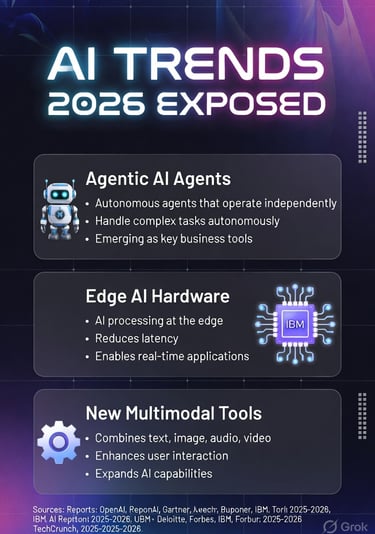
In March 2026, software development has crossed an irreversible threshold. OpenAI's GPT-5.4 (released March 5, 2026) introduces native computer-use capabilities, a 1-million-token context window, and optimized agentic reasoning that lets models autonomously navigate IDEs, browsers, terminals, and codebases. Perplexity Computer (launched February 25, 2026) orchestrates up to 19 specialized models into a unified digital worker capable of end-to-end project completion—from research and architecture design to coding, testing, and deployment—with minimal human oversight. These breakthroughs, combined with maturing multi-agent systems, are fundamentally altering coding. Developers no longer write most code line-by-line; they orchestrate AI teams that handle implementation while humans focus on strategy, architecture, and innovation. Anthropic's 2026 Agentic Coding Trends Report describes this as the shift to "repository intelligence," where AI grasps entire project structures, intent, and relationships. This comprehensive guide—drawn from primary sources including OpenAI announcements, Perplexity's launch details, Anthropic's coding trends report, Gartner’s 2026 Strategic Trends, Deloitte Tech Trends, and Forbes analyses—explains exactly how these technologies work, their real-world impact on coding workflows, productivity metrics, leading tools, challenges, and strategies to thrive in this new era. The Core Shift: From Generative Assistance to Autonomous Agentic Coding Traditional AI coding tools (pre-2026) were prompt-response systems: suggest completions, fix bugs, or generate snippets on demand. 2026 marks the agentic era, where models plan, execute, reflect, and iterate independently. GPT-5.4's Breakthrough Features for Coding Native computer-use: Models can take screenshots, interact with GUIs, run terminals, and edit files autonomously. 1M-token context: Analyze full repositories without truncation. Thinking mode: Real-time adjustable reasoning plans for complex tasks. GPT-5.4 Pro: Maximum performance for intricate, tool-heavy workflows. OpenAI positions GPT-5.4 as the "most capable frontier model for professional work," with early integrations in GitHub Copilot showing higher success rates in agentic tasks. Perplexity Computer's Orchestration Power Launched February 25, 2026, for Perplexity Max subscribers ($200/month), this cloud-based system: Coordinates 19 models (e.g., Opus 4.6 for reasoning, Gemini for research, Veo 3.1 for video/docs, Grok for speed). Spins up sub-agents for parallel tasks. Handles long-running projects end-to-end in the background. Users report completing full prototypes (research → code → deploy) in hours, transforming solo developers into project orchestrators. Multi-Agent Systems: The New Standard Single agents struggle with complexity. Multi-agent architectures divide labor: Researcher agent gathers requirements/docs. Architect agent designs structure. Coder agent implements. Tester agent validates. Reviewer agent checks security/compliance. Anthropic predicts coordinated agent teams will dominate 2026, with organizations harnessing parallel reasoning across separate contexts for tasks once impossible. Real-World Impact on Coding Productivity and Workflows Measured Gains Teams using GPT-5.4 report 40% fewer errors in agentic coding (OpenAI internal benchmarks). Perplexity Computer users achieve end-to-end project lifecycles 5–10x faster. Multi-agent setups in enterprises reduce development cycles by 3–5x (Deloitte estimates 30–35% SDLC productivity lift from agentic AI). Workflow Transformations High-Level Orchestration: Developers describe goals in natural language → agents plan subtasks → execute autonomously. Repository-Wide Intelligence: 1M-token models refactor entire codebases intelligently. Autonomous Debugging & Testing: Agents simulate edge cases, run tests, fix issues iteratively. Cross-Tool Integration: Agents browse docs, query APIs, commit to Git, deploy to cloud. Non-technical stakeholders now prototype MVPs directly, democratizing development. Leading Tools and Platforms in March 2026 Model-Level Leaders GPT-5.4 (OpenAI): Best for native computer-use and long-context agentic coding. Claude Sonnet 4.6 / Opus 4.6 (Anthropic): Optimized for autonomous hours-long coding sessions. Gemini 3.1 Pro (Google): Strong multi-modal and repository processing. Agent Frameworks & Editors Cursor: AI-first editor with Automations for triggered agents. Devin (Cognition): Fully autonomous cloud IDE agent. LangGraph / CrewAI: Production-grade multi-agent orchestration. GitHub Copilot (with GPT-5.4): Agentic enhancements rolling out. Emerging Orchestrators Perplexity Computer: Unified multi-model workspace. Anthropic's Agent SDK: For building custom agentic flows. Challenges in the Agentic Coding Era Despite gains, hurdles persist: Governance Risks: Gartner warns >40% agentic projects may cancel by 2027 due to costs, unclear ROI, inadequate controls. Overreliance & Skill Atrophy: Developers risk losing deep debugging skills. Cost Explosion: Long-running agents can rack up high inference bills. Security/Compliance: Autonomous actions need bounded autonomy and audit trails. Successful adopters implement human-in-the-loop for exceptions, FinOps monitoring, and zero-trust agent policies. Strategic Roadmap for Developers and Teams in 2026 Adopt Agentic-First Tools Immediately — Start with GPT-5.4 in ChatGPT/Codex or Perplexity Computer for one workflow. Build Multi-Agent Habits — Use LangGraph/CrewAI to coordinate specialists rather than single models. Redesign Processes — Shift from code-writing to orchestration, architecture, and validation. Prioritize Governance — Implement cost caps, escalation paths, immutable logs. Measure True ROI — Track cycle time reduction, error rates, and innovation velocity—not just lines of code generated. Organizations that master orchestration will outpace competitors 5–10x in speed and scale. The Long-Term Vision: Coding in the Late 2020s By 2028–2030: AI-native platforms enable tiny teams to build massive applications. 80% of organizations evolve large engineering teams into AI-augmented ones (Gartner). Agents handle 80%+ of routine implementation, freeing humans for creative/strategic work. The future isn't AI replacing coders—it's coders who master agent orchestration becoming exponentially more powerful. This guide equips you to lead the transformation. The agentic coding revolution is here—embrace orchestration, or risk being left behind. Authentic High-Quality References (Primary Sources – March 2026 Verified) OpenAI: "Introducing GPT-5.4" (March 5, 2026) – https://openai.com/index/introducing-gpt-5-4 TechCrunch: "OpenAI launches GPT-5.4 with Pro and Thinking versions" (March 5, 2026) Perplexity AI: "Introducing Perplexity Computer" (February 25, 2026) – https://www.perplexity.ai/hub/blog/introducing-perplexity-computer Anthropic: "2026 Agentic Coding Trends Report" (January 2026) – https://resources.anthropic.com/hubfs/2026%20Agentic%20Coding%20Trends%20Report.pdf Gartner: "Top Strategic Technology Trends for 2026" (October 2025) – https://www.gartner.com/en/newsroom/press-releases/2025-10-20-gartner-identifies-the-top-strategic-technology-trends-for-2026 Deloitte: "Tech Trends 2026 – Agentic AI Strategy" (December 2025) – https://www.deloitte.com/us/en/insights/topics/technology-management/tech-trends/2026/agentic-ai-strategy.html Forbes: "Agentic AI Takes Over — 11 Shocking 2026 Predictions" (December 31, 2025) – https://www.forbes.com/sites/markminevich/2025/12/31/agentic-ai-takes-over-11-shocking-2026-predictions/
3/7/20261 min read
My post content
Email-ibm.anshuman@gmail.com
© 2026 CodeForge AI | Privacy Policy |Terms of Service | Contact | Disclaimer | 1000 university college list|book library australia 2026|Latest AI Trends (Global & India 2026) 400 GLOBAL BOOK STORE WORLDWID|TOP 400 FREE BOOK LIBRARY USA|TOP 400 FREE BOOK LIBRARY INDIA|Audiobooks at Just ₹99 | $1.25| E-Books at Just ₹49 | $0.50| 50+ AI Expert Tutorials
All my books are exclusively available on Amazon. The free notes/materials on globalcodemaster.com do NOT match even 1% with any of my PUBLISHED BOoks. Similar topics ≠ same content. Books have full details, exercises, chapters & structure — website notes do not.No book content is shared here. We fully comply with Amazon policies.
🚀 Best content for SSC, CGL, LDC, TET, NET & SET preparation!
📚 Maths | Reasoning | GK | Previous Year Questions | Tips & Tricks
👉 Join our WhatsApp Channel now:
🔗 https://whatsapp.com/channel/0029Vb6kg2vFnSz4zknEOG1D...