US Senate Officially Approves ChatGPT, Gemini & Copilot for Government Use
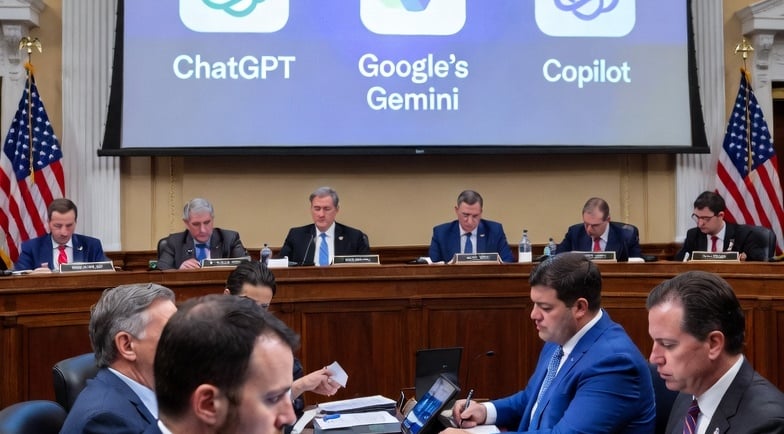
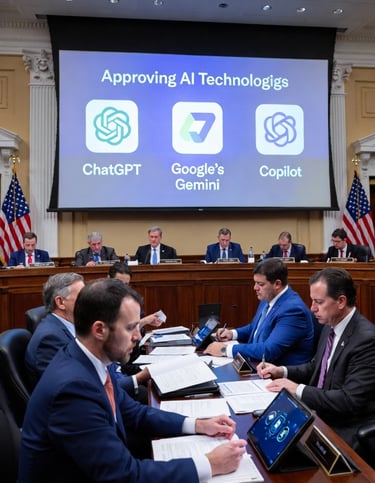
In a significant step toward mainstreaming artificial intelligence in one of the world's most powerful legislative bodies, the United States Senate has officially permitted the use of leading generative AI chatbots for official work. This development, reported widely on March 10, 2026, marks a key milestone in how governments are integrating frontier AI technologies into daily operations. What Exactly Happened? On March 9 or 10, 2026 (sources vary slightly on the announcement date, but coverage peaked on March 10), the Chief Information Officer (CIO) of the Senate Sergeant-at-Arms issued a concise one-page internal memo. This memo authorizes Senate aides and staff to use three specific AI tools for routine official tasks: OpenAI’s ChatGPT (specifically the enterprise version, ChatGPT Enterprise, which offers enhanced data privacy and security features) Google’s Gemini (integrated via Google Workspace) Microsoft’s Copilot (already built into Senate platforms like Microsoft 365 tools) These tools can assist with everyday legislative and administrative work, including: Conducting research and analysis Drafting and editing documents, reports, and memos Summarizing large amounts of information Preparing talking points, briefing materials, and responses for lawmakers The memo emphasizes that Copilot, in particular, is already seamlessly integrated into Senate systems, making it easy and secure to use without external data risks. Importantly, the approval is limited to non-sensitive, routine tasks. Staff are instructed to follow existing data privacy rules, avoid inputting classified or highly confidential information, and use privacy settings where available. This decision builds on a broader Senate AI governance framework established in October 2025, which categorizes AI tools into tiers based on risk. The three approved tools represent the first to achieve "Tier 2" authorization under this system, meaning they passed security reviews for use with Senate data. For context, the House of Representatives had already permitted similar tools (including Anthropic's Claude in addition to these three) for staff use, according to tracking by organizations like the POPVOX Foundation. The Senate's move brings the upper chamber in line and signals coordinated progress across Congress. Why This Is a Landmark Policy Move Governments worldwide have been cautious about generative AI due to legitimate concerns: Data privacy and leakage risks (what if sensitive policy details are shared with external servers?) Potential for hallucinations (AI generating inaccurate information) Bias, security vulnerabilities, and compliance with federal rules like the Federal Information Security Modernization Act (FISMA) By officially approving these tools after internal reviews, the Senate demonstrates that leading commercial AI models now meet institutional standards for security, reliability, and compliance—at least for non-classified work. Microsoft Copilot's deep integration (via government-grade Microsoft 365 environments) likely helped ease concerns, as it offers enterprise controls like data residency and audit logs. This isn't just about convenience; it's a vote of confidence in the maturity of generative AI technology from one of the most scrutinized institutions on Earth. Global Significance and Ripple Effects This is believed to be the first time a major Western legislature has formally greenlighted frontier AI models (from OpenAI, Google, and Microsoft) at this scale for official legislative support. While some agencies (like parts of the US federal government) had earlier adopted specialized versions like ChatGPT Gov or Gemini for Government, the Senate's decision applies directly to core lawmaking processes. Key global implications: Signals mainstream institutional trust — When the US Senate says these tools are safe enough for drafting laws and briefings, it reassures parliaments, ministries, and public administrations everywhere. Expect accelerated adoption in the European Union (where GDPR compliance is strict), the United Kingdom, India, Canada, Australia, and other democracies. Speeds up AI regulation debates — Governments that were hesitant may now push for clearer national guidelines on AI in public sector use, balancing innovation with safeguards. Boosts enterprise and public-sector procurement — Companies like OpenAI, Google, and Microsoft gain massive validation. This opens doors to larger government contracts worldwide, as procurement officers can point to the Senate's approval as precedent. Encourages responsible AI frameworks — The Senate's tiered approach (with ongoing reviews for higher-risk uses) could become a model for other institutions. Influences private-sector confidence — Businesses handling sensitive data (finance, healthcare, legal) see this as proof that compliant versions of these tools are ready for high-stakes environments. In simple terms: This policy reduces psychological and bureaucratic barriers. If the US Senate trusts ChatGPT for research and drafting, why shouldn't your government ministry, state legislature, or company do the same? Of course, challenges remain—hallucinations could lead to policy errors if unchecked, and broader classified use is still off-limits. But this step normalizes AI as a productivity booster in governance, much like email or spreadsheets did decades ago. References (Authentic Sources – March 2026 Coverage) The New York Times – "ChatGPT, Other Chatbots Approved for Official Use in the Senate" (March 10, 2026) https://www.nytimes.com/2026/03/10/us/politics/us-senate-chatgpt-ai-chatbots.html (Primary source reviewing the memo directly) Reuters – "ChatGPT, other AI chatbots approved for official use in US Senate, NYT reports" (March 10, 2026) https://www.reuters.com/technology/chatgpt-other-ai-chatbots-approved-official-use-us-senate-nyt-reports-2026-03-10/ POPVOX Foundation – "Updated: Where the House and Senate are on Internal Use of AI" (Updated March 2026) https://www.popvox.org/blog/house-senate-ai (Detailed tracking of congressional AI policies, including Senate Tier 2 approvals) The Economic Times / Times of India – Multiple reports citing the NYT memo (March 10–11, 2026) GV Wire / Newsmax – Additional coverage confirming details from the memo (March 10, 2026) These sources are from reputable outlets with direct references to the internal Senate memo or official announcements. Always cross-check with primary government releases for the most current guidelines, as policies can evolve. This approval is more than a technical update—it's a powerful symbol that generative AI has moved from experimental novelty to trusted infrastructure in democratic governance. As more institutions follow, the global impact on productivity, policy-making speed, and AI adoption will only grow.
3/11/20261 min read
My post content
Email-ibm.anshuman@gmail.com
© 2026 CodeForge AI | Privacy Policy |Terms of Service | Contact | Disclaimer | 1000 university college list|book library australia 2026|Latest AI Trends (Global & India 2026) 400 GLOBAL BOOK STORE WORLDWID|TOP 400 FREE BOOK LIBRARY USA|TOP 400 FREE BOOK LIBRARY INDIA|Audiobooks at Just ₹99 | $1.25| E-Books at Just ₹49 | $0.50| 50+ AI Expert Tutorials
All my books are exclusively available on Amazon. The free notes/materials on globalcodemaster.com do NOT match even 1% with any of my PUBLISHED BOoks. Similar topics ≠ same content. Books have full details, exercises, chapters & structure — website notes do not.No book content is shared here. We fully comply with Amazon policies.
🚀 Best content for SSC, CGL, LDC, TET, NET & SET preparation!
📚 Maths | Reasoning | GK | Previous Year Questions | Tips & Tricks
👉 Join our WhatsApp Channel now:
🔗 https://whatsapp.com/channel/0029Vb6kg2vFnSz4zknEOG1D...