Description
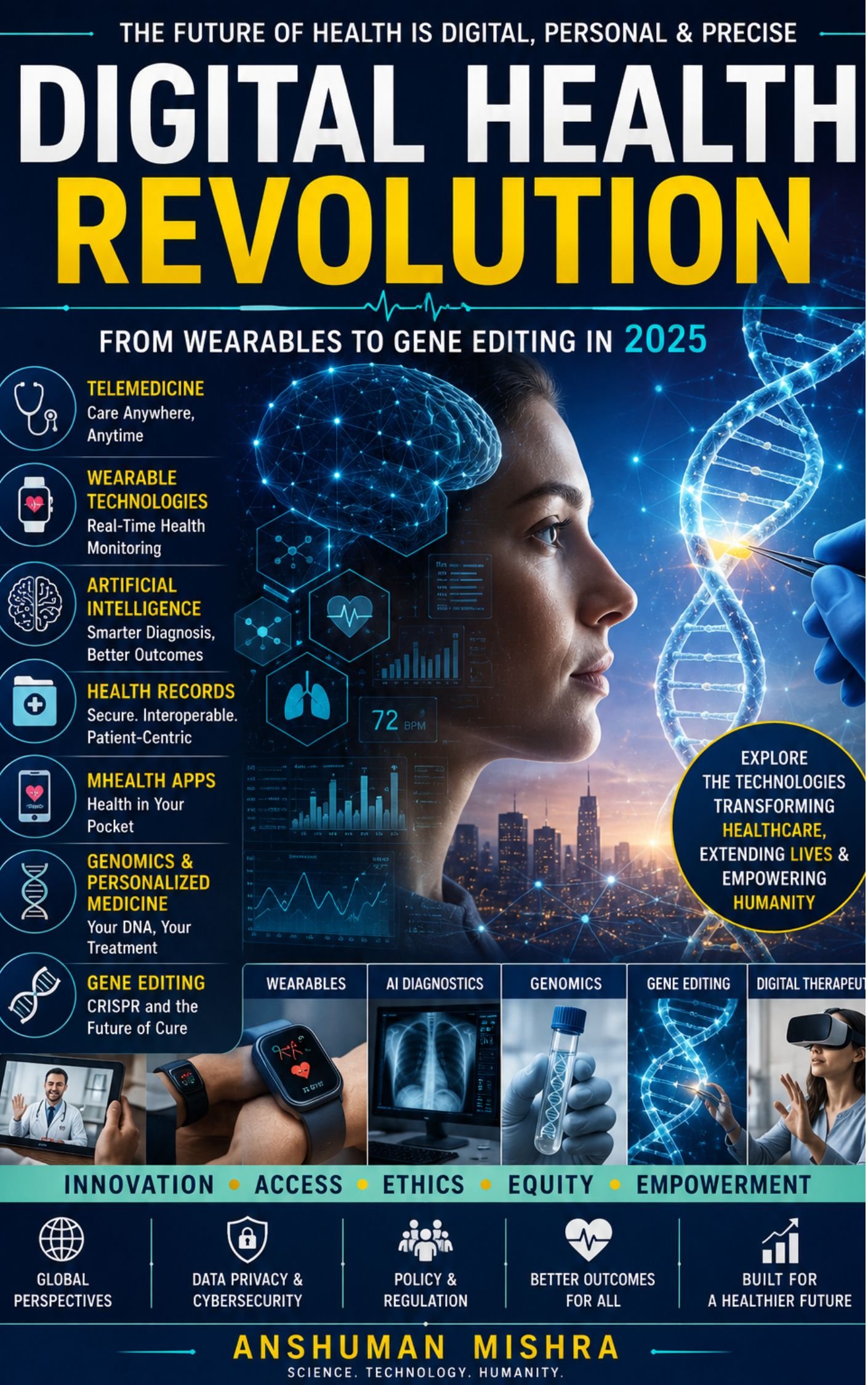
Digital Health Revolution: From Wearables to Gene Editing in 2025
Exploring the Future of Healthcare Through Artificial Intelligence, Genomics, Telemedicine, and Digital Innovation
Healthcare is undergoing one of the most significant transformations in human history. Rapid advances in artificial intelligence, wearable technology, genomics, biotechnology, cloud computing, mobile applications, and precision medicine are redefining how diseases are prevented, diagnosed, monitored, and treated. What was once limited to hospitals and laboratories is now increasingly available through smartphones, smartwatches, remote monitoring systems, and AI-powered healthcare platforms.
Digital Health Revolution: From Wearables to Gene Editing in 2025 provides a comprehensive exploration of this rapidly evolving healthcare ecosystem. Written in a practical, research-oriented, and accessible style, this book examines the technologies, innovations, ethical challenges, and global trends that are shaping the future of medicine in the digital age.
The journey begins with the rise of digital health and bio-innovation, explaining how advances in computing, biotechnology, and connectivity have transformed healthcare delivery across the world. Readers gain insights into precision medicine, preventive healthcare, patient-centered care, and the growing role of governments, startups, hospitals, and international health organizations in driving digital transformation.
The book provides an in-depth study of telemedicine, illustrating how virtual consultations, remote patient monitoring, wearable sensors, cloud computing, 5G networks, and digital communication platforms have expanded access to quality healthcare. Real-world case studies from India, the United States, and Africa demonstrate how digital technologies are reducing geographical barriers and improving healthcare accessibility.
A dedicated section explores wearable technologies, including smartwatches, biosensors, ECG monitors, glucose monitoring devices, sleep trackers, implantable devices, smart clothing, and brain-computer interfaces. Readers discover how continuous health monitoring enables early disease detection, preventive care, and personalized treatment strategies while also addressing challenges related to privacy, cybersecurity, and medical data protection.
Artificial Intelligence has emerged as one of the most transformative forces in healthcare, and this book examines its growing role in diagnostics, medical imaging, pathology, predictive analytics, robotic surgery, virtual nursing assistants, clinical decision support systems, and personalized treatment planning. It also discusses ethical issues including algorithmic bias, transparency, explainable AI, and responsible deployment of intelligent healthcare systems.
Modern healthcare depends heavily on secure and interoperable health information systems. The book explains Electronic Health Records (EHR), Electronic Medical Records (EMR), global interoperability standards such as HL7 and FHIR, blockchain-based medical record management, cybersecurity strategies, and national digital healthcare initiatives including India’s Ayushman Bharat Digital Mission (ABDM).
Readers are introduced to the rapidly expanding field of mobile health (mHealth), where smartphones, mobile applications, artificial intelligence, chatbots, gamification, and remote monitoring tools are improving healthcare accessibility for mental health, women’s health, elderly care, chronic disease management, and preventive medicine across urban and rural populations.
The book also explores genomics and personalized medicine, explaining DNA sequencing, pharmacogenomics, direct-to-consumer genetic testing, ancestry analysis, genome privacy, and the shift from generalized treatment approaches toward individualized healthcare based on genetic information.
One of the most fascinating sections examines CRISPR gene-editing technology, discussing its scientific foundations, medical applications, therapeutic potential, ethical debates, regulatory frameworks, and its impact on cancer treatment, rare genetic diseases, infectious diseases, agriculture, and biotechnology. The discussion presents both the opportunities and responsibilities associated with modern gene editing technologies.
Digital therapeutics, virtual reality therapy, AI-powered mental health platforms, evidence-based healthcare applications, wearable mental health technologies, and emerging approaches to behavioral medicine are explored alongside innovations transforming mental healthcare and chronic disease management.
The book further investigates how developing economies are adopting mobile-first healthcare solutions, telemedicine platforms, AI-assisted diagnostics, SMS-based public health programs, drone-based medical logistics, and community-centered digital health initiatives to bridge healthcare access gaps. Special attention is given to innovations emerging from India, Africa, and other rapidly developing regions.
Finally, the book examines the ethical, legal, regulatory, and social dimensions of digital healthcare, discussing privacy, data ownership, health equity, patient autonomy, algorithmic decision-making, digital inclusion, and the future relationship between healthcare professionals and intelligent technologies. Readers gain a balanced understanding of how innovation must be guided by ethics, transparency, and human-centered design.
Inside This Book You’ll Discover
- Digital Health Transformation and Healthcare Innovation
- Telemedicine and Virtual Healthcare Systems
- Remote Patient Monitoring (RPM)
- Wearable Health Devices and Biosensors
- Artificial Intelligence in Medical Diagnosis
- AI-Powered Healthcare and Predictive Analytics
- Electronic Health Records (EHR) and EMR
- Healthcare Interoperability (HL7 & FHIR)
- Blockchain in Healthcare
- Mobile Health (mHealth) Applications
- Healthcare Chatbots and Virtual Care
- Genomics and Personalized Medicine
- DNA Testing and Pharmacogenomics
- CRISPR Gene Editing Technology
- Precision Medicine and Biotechnology
- Digital Therapeutics (DTx)
- Mental Health Technology and Virtual Reality Therapy
- Healthcare Cybersecurity and Data Privacy
- Global Digital Health Policies
- Future Trends in Healthcare Technology
Written in an engaging, research-driven, and interdisciplinary style, this book is ideal for medical students, healthcare professionals, biotechnology researchers, computer science students, biomedical engineers, AI developers, public health professionals, health informatics specialists, policymakers, startup founders, educators, and anyone interested in the future of medicine and healthcare technology.
Whether you are exploring digital health for academic study, healthcare innovation, biotechnology research, AI development, public health planning, or professional advancement, Digital Health Revolution: From Wearables to Gene Editing in 2025 provides a comprehensive roadmap to understanding one of the most important technological revolutions of the 21st century.
Combining scientific knowledge, emerging technologies, global case studies, ethical perspectives, and future healthcare trends, this book equips readers with the insights needed to understand and participate in the rapidly evolving world of digital medicine and precision healthcare.





Reviews
There are no reviews yet.