Description
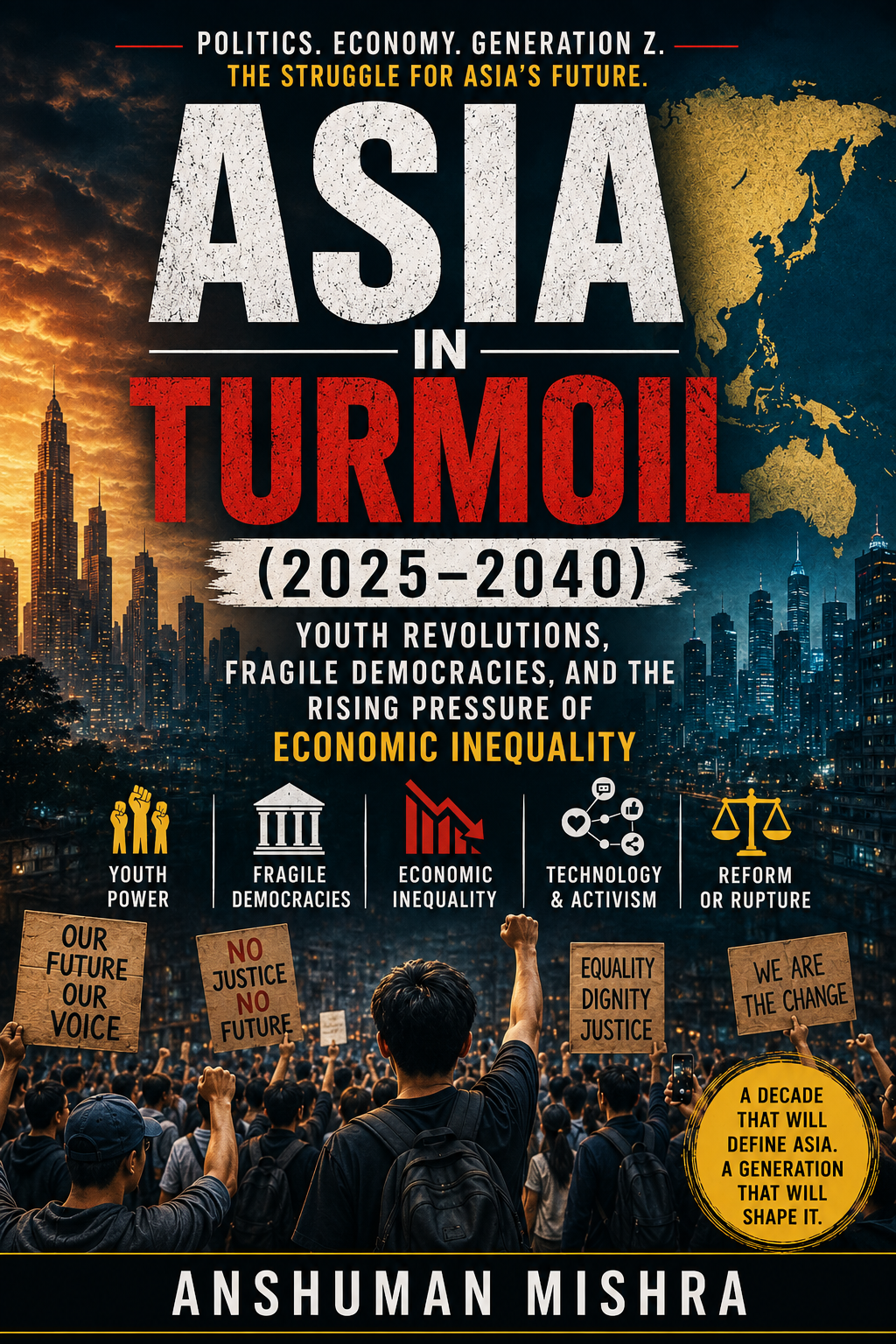
Asia in Turmoil (2025–2040): Youth Revolutions, Fragile Democracies, and the Rising Pressure of Economic Inequality
Understanding the Political, Economic, and Social Forces Reshaping Asia’s Future
Author: Anshuman Mishra
Asia is entering one of the most transformative periods in its modern history. For decades, the region symbolized rapid economic growth, expanding middle classes, technological advancement, and increasing global influence. Today, however, beneath impressive development statistics lie growing structural challenges that are reshaping politics, governance, economies, and society.
Asia in Turmoil (2025–2040): Youth Revolutions, Fragile Democracies, and the Rising Pressure of Economic Inequality presents a comprehensive, evidence-based, and interdisciplinary examination of these emerging realities. Combining insights from political science, economics, sociology, international relations, public policy, development studies, and regional security, the book analyzes the interconnected forces influencing Asia’s political and economic future over the coming decades.
Rather than treating protests, political instability, demographic change, and economic inequality as isolated events, this book demonstrates how they interact within broader structural transformations affecting governance, employment, technology, democratic institutions, and regional stability.
Asia at a Historic Turning Point
The opening chapters introduce readers to the changing political landscape of Asia, exploring why traditional assumptions about economic growth and political stability are increasingly being challenged.
Key themes include:
- Demographic transformation
- Youth population dynamics
- Economic modernization
- Political expectations
- Institutional adaptation
- Social mobility
- Regional diversity
- Governance challenges
- Development transitions
- Long-term structural change
The book emphasizes that Asia cannot be understood as a single political or economic model. Instead, it presents a comparative framework that highlights both common regional patterns and important national differences.
The Rise of a New Generation
One of the defining themes of the book is the growing influence of younger generations across Asia.
Today’s youth are:
- More educated
- More digitally connected
- More globally informed
- More technologically skilled
- More economically ambitious
- More engaged with public issues
At the same time, many face significant challenges, including employment uncertainty, housing affordability, rising living costs, and changing labor markets.
The book examines how these conditions influence civic participation, public expectations, and the evolving relationship between citizens and institutions.
Economic Growth and Structural Inequality
Rapid economic development has transformed many Asian economies, but growth has not always benefited all groups equally.
Readers explore:
- Income inequality
- Regional disparities
- Urban-rural development gaps
- Labor market transformation
- Youth unemployment
- Informal employment
- Education-to-employment transitions
- Cost-of-living pressures
- Middle-class challenges
- Social mobility
The discussion focuses on the long-term economic and institutional factors shaping opportunity and inclusion across diverse Asian societies.
Democracy, Governance, and Institutional Capacity
The book provides an objective analysis of governance systems and institutional development across the region.
Topics include:
- Democratic institutions
- Electoral systems
- Public administration
- Rule of law
- Transparency
- Accountability
- Public trust
- Political participation
- Institutional reform
- Governance resilience
Rather than evaluating individual governments, the analysis explores broader institutional trends and the factors that strengthen or weaken political legitimacy.
Regional Perspectives Across Asia
Dedicated chapters examine the unique characteristics of major Asian subregions:
South Asia
- Demographic growth
- Political development
- Social mobility
- Governance institutions
- Economic transformation
- Development challenges
Southeast Asia
- Rapid industrialization
- Urbanization
- Digital economies
- Political diversity
- Regional cooperation
- Development pathways
East Asia
- Advanced economies
- Technological leadership
- Demographic aging
- Labor market pressures
- Innovation systems
- Social change
Central Asia
- Post-Soviet transitions
- Economic diversification
- Migration
- Regional security
- Institutional development
- Governance modernization
These comparative studies allow readers to appreciate both regional diversity and common structural trends.
Technology and Digital Politics
Technology is transforming political participation, communication, and governance across Asia.
The book explores:
- Digital communication
- Social media
- Online civic engagement
- Information ecosystems
- Artificial Intelligence
- Digital governance
- Cybersecurity
- Data regulation
- Online participation
- Information resilience
Balanced discussion highlights both the opportunities and challenges created by rapidly evolving digital technologies.
Youth, Gender, and Social Inclusion
Inclusive development requires understanding the diverse experiences of different social groups.
Topics include:
- Gender equality
- Youth participation
- Women’s leadership
- Education access
- Labor market inclusion
- Entrepreneurship
- Civic engagement
- Social mobility
- Human development
- Inclusive governance
The analysis emphasizes the importance of expanding opportunities while strengthening institutional resilience.
Education, Skills, and Employment
Education plays a central role in preparing societies for technological and economic transformation.
Readers examine:
- Education reform
- Skills development
- Employability
- Higher education
- Vocational training
- Innovation ecosystems
- Lifelong learning
- Brain drain
- Human capital
- Workforce adaptation
The book discusses how education systems can better align with changing labor market requirements.
Economic Reform and Inclusive Growth
The later chapters explore strategies for strengthening long-term economic resilience through:
- Employment generation
- Entrepreneurship
- Innovation policy
- Inclusive growth
- Social protection
- Public investment
- Infrastructure development
- Digital transformation
- Economic diversification
- Sustainable development
Rather than advocating specific political positions, the discussion examines comparative policy approaches adopted across different countries.
Democratic Resilience and Institutional Renewal
The final sections focus on strengthening democratic governance through:
- Institutional capacity
- Civic participation
- Electoral integrity
- Administrative reform
- Civil society
- Transparency
- Accountability
- Public dialogue
- Policy innovation
- Democratic resilience
The book argues that effective governance requires balancing stability, inclusion, economic opportunity, and institutional legitimacy.
Looking Toward 2040
The concluding chapter presents multiple future scenarios for Asia’s political and economic development.
Rather than predicting a single outcome, the book explores different pathways influenced by:
- Demographic change
- Economic policy
- Technological innovation
- Institutional reform
- Regional cooperation
- Global economic conditions
- Education
- Employment
- Governance
- Social cohesion
Readers are encouraged to think critically about the complex interactions shaping Asia’s future.
Key Topics Covered
- Asian Politics
- Political Economy
- Comparative Politics
- International Relations
- Democracy
- Governance
- Public Policy
- Youth Studies
- Economic Development
- Income Inequality
- Labor Markets
- Digital Transformation
- Artificial Intelligence
- Social Media
- Regional Security
- Education Reform
- Human Capital
- Sustainable Development
- Development Studies
- Future Scenarios
Ideal For
This book is recommended for:
- Undergraduate Students
- Postgraduate Students
- Political Science Students
- International Relations Students
- Economics Students
- Sociology Students
- Public Policy Scholars
- Civil Service Aspirants
- Competitive Examination Candidates
- Researchers
- University Faculty
- Journalists
- Think Tank Professionals
- Development Practitioners
- Global Affairs Enthusiasts
Why Read This Book?
Unlike books that focus exclusively on economic growth, democratic institutions, or youth movements, Asia in Turmoil (2025–2040) integrates these interconnected themes into a single analytical framework. It combines historical context, comparative analysis, and forward-looking perspectives to help readers understand the structural forces influencing one of the world’s most important regions.
Written in clear and accessible language while maintaining academic rigor, this book is an essential resource for anyone seeking to understand how demographic change, economic inequality, technological transformation, governance, and institutional development are shaping Asia’s future between 2025 and 2040.
Whether you are preparing for university examinations, conducting research, working in public policy, or simply interested in global affairs, this book provides a balanced, insightful, and comprehensive guide to the challenges and opportunities facing Asia in the decades ahead.

Reviews
There are no reviews yet.