Description
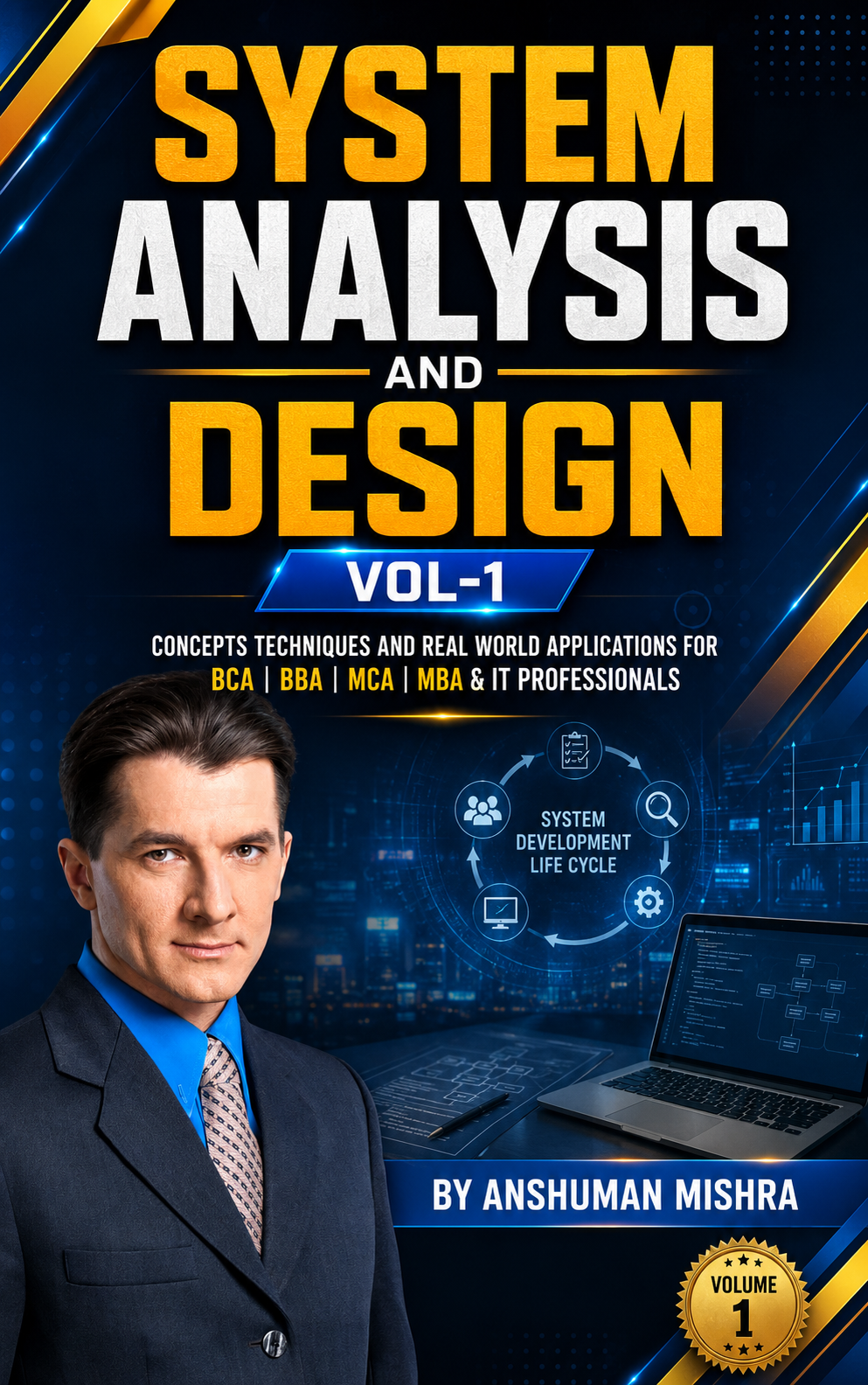
System Analysis and Design: Concepts, Techniques, and Real-World Applications (VOL-1)
A Complete Guide for BCA, BBA, MCA, MBA, Computer Science Students, and IT Professionals
Author: Anshuman Mishra
In today’s digital economy, every successful software application, enterprise solution, mobile application, banking platform, healthcare system, e-commerce website, educational portal, and government information system begins with one essential process—System Analysis and Design (SAD).
Before software developers write a single line of code, organizations must understand business problems, gather user requirements, evaluate feasibility, design efficient systems, and prepare structured implementation plans. System Analysis and Design serves as the bridge between business objectives and technological solutions, making it one of the most important subjects in Computer Science, Information Technology, Business Administration, and Information Systems education.
System Analysis and Design: Concepts, Techniques, and Real-World Applications (VOL-1) has been carefully written to provide students and professionals with a strong conceptual foundation as well as practical knowledge required for modern software and information system development.
This book combines theoretical concepts, industry-standard methodologies, practical examples, diagrams, business case studies, and contemporary software engineering practices into one comprehensive learning resource.
Learn the Fundamentals of System Analysis and Design
The book begins by introducing readers to the world of System Analysis and Design.
Topics include:
- Information Systems
- Business Systems
- Types of Systems
- Open Systems
- Closed Systems
- Deterministic Systems
- Probabilistic Systems
- Organizational Systems
- Digital Transformation
- Enterprise Information Systems
Readers develop a clear understanding of how information systems support modern organizations and business operations.
Understand the Role of the System Analyst
A successful software project depends heavily on the skills of the System Analyst.
Dedicated chapters explain:
- Responsibilities of a System Analyst
- Problem Identification
- Business Process Analysis
- Communication Skills
- Requirement Gathering
- Project Coordination
- Stakeholder Management
- Documentation
- Decision Making
- Solution Design
Real-world examples demonstrate how analysts transform business requirements into successful software solutions.
Master the System Development Life Cycle (SDLC)
System Development Life Cycle forms the backbone of professional software engineering.
This book explains every stage of SDLC in detail, including:
- Planning
- Feasibility Analysis
- Requirement Analysis
- System Design
- Development
- Testing
- Deployment
- Maintenance
- Evaluation
- Continuous Improvement
Students also learn how SDLC supports quality assurance, project management, and successful software delivery.
Compare Modern Software Development Models
Modern software projects require different development methodologies depending on business requirements.
The book provides detailed discussions of:
- Waterfall Model
- Spiral Model
- Iterative Model
- Agile Development
- Scrum Concepts
- Prototyping Model
- Incremental Development
- Hybrid Models
- Model Comparison
- Best Practice Selection
Readers understand the strengths, limitations, and practical applications of each SDLC model.
Conduct Professional Feasibility Studies
Before beginning any software project, organizations evaluate its feasibility.
This book teaches students how to perform:
- Technical Feasibility
- Economic Feasibility
- Operational Feasibility
- Legal Feasibility
- Schedule Feasibility
- Cost-Benefit Analysis
- Risk Assessment
- Project Selection
- Business Justification
- Feasibility Reporting
Practical examples help readers understand how organizations make informed investment decisions.
Learn Requirement Gathering Techniques
Accurate requirements are the foundation of every successful information system.
This book explains professional requirement engineering techniques, including:
- Interviews
- Questionnaires
- Observation
- Document Analysis
- Stakeholder Meetings
- Functional Requirements
- Non-Functional Requirements
- Use Case Analysis
- Requirement Validation
- Software Requirement Specification (SRS)
Students learn how to identify business needs and translate them into clear technical specifications.
Design Effective Information Systems
System design transforms requirements into practical software solutions.
Topics covered include:
- Logical Design
- Physical Design
- Input Design
- Output Design
- User Interface Design
- Database Design
- ER Diagrams
- Normalization
- Metadata
- Data Dictionary
Readers gain practical knowledge of designing efficient, secure, and user-friendly systems.
Security and Control Design
Modern information systems must protect organizational data and user privacy.
This book discusses:
- Access Control
- Authentication
- Authorization
- Data Validation
- Security Controls
- Backup Strategies
- Error Handling
- Data Integrity
- Audit Trails
- System Reliability
Security principles are presented within the broader context of enterprise system development.
Practical Learning with Real-World Applications
Unlike purely theoretical textbooks, this book emphasizes practical learning through:
- Business Case Studies
- Industry Examples
- Software Development Scenarios
- Sample Documentation
- SRS Templates
- Feasibility Reports
- Design Guidelines
- Practical Exercises
- Mini Projects
- Review Questions
Readers learn how academic concepts are applied in real software development environments.
Industry-Oriented Learning
The book prepares students for both university examinations and professional careers by integrating concepts from:
- Software Engineering
- Information Systems
- Business Analysis
- Project Management
- Database Systems
- Enterprise Computing
- Digital Transformation
- Business Intelligence
- Cloud Computing
- Artificial Intelligence
This interdisciplinary approach reflects the evolving needs of the IT industry.
Key Topics Covered
- System Analysis
- System Design
- SDLC
- Waterfall Model
- Agile Development
- Spiral Model
- Prototyping
- Feasibility Study
- Requirement Engineering
- Software Requirement Specification
- Use Case Analysis
- Database Design
- ER Diagrams
- Normalization
- User Interface Design
- Information Systems
- Business Systems
- Security Design
- Project Planning
- Business Analysis
Ideal For
This book is highly recommended for:
- BCA Students
- BBA Students
- MCA Students
- MBA Students
- Computer Science Students
- Information Technology Students
- Software Engineering Students
- University Faculty
- Software Developers
- Business Analysts
- System Analysts
- Project Managers
- IT Professionals
- Entrepreneurs
- Competitive Examination Aspirants
- Self-Learners
Why Read This Book?
Unlike traditional textbooks that focus only on theory, System Analysis and Design: Concepts, Techniques, and Real-World Applications (VOL-1) combines academic concepts with practical implementation strategies used in modern software development organizations.
Through clear explanations, real-world business examples, structured methodologies, professional documentation practices, and industry-oriented case studies, this book equips readers with the knowledge and practical skills needed to analyze business problems, design efficient information systems, and participate confidently in software development projects.
Whether you are preparing for university examinations, building a career in software engineering, working as a business analyst, or managing enterprise IT projects, this book provides a strong foundation in one of the most essential disciplines of modern infor





Reviews
There are no reviews yet.