Description
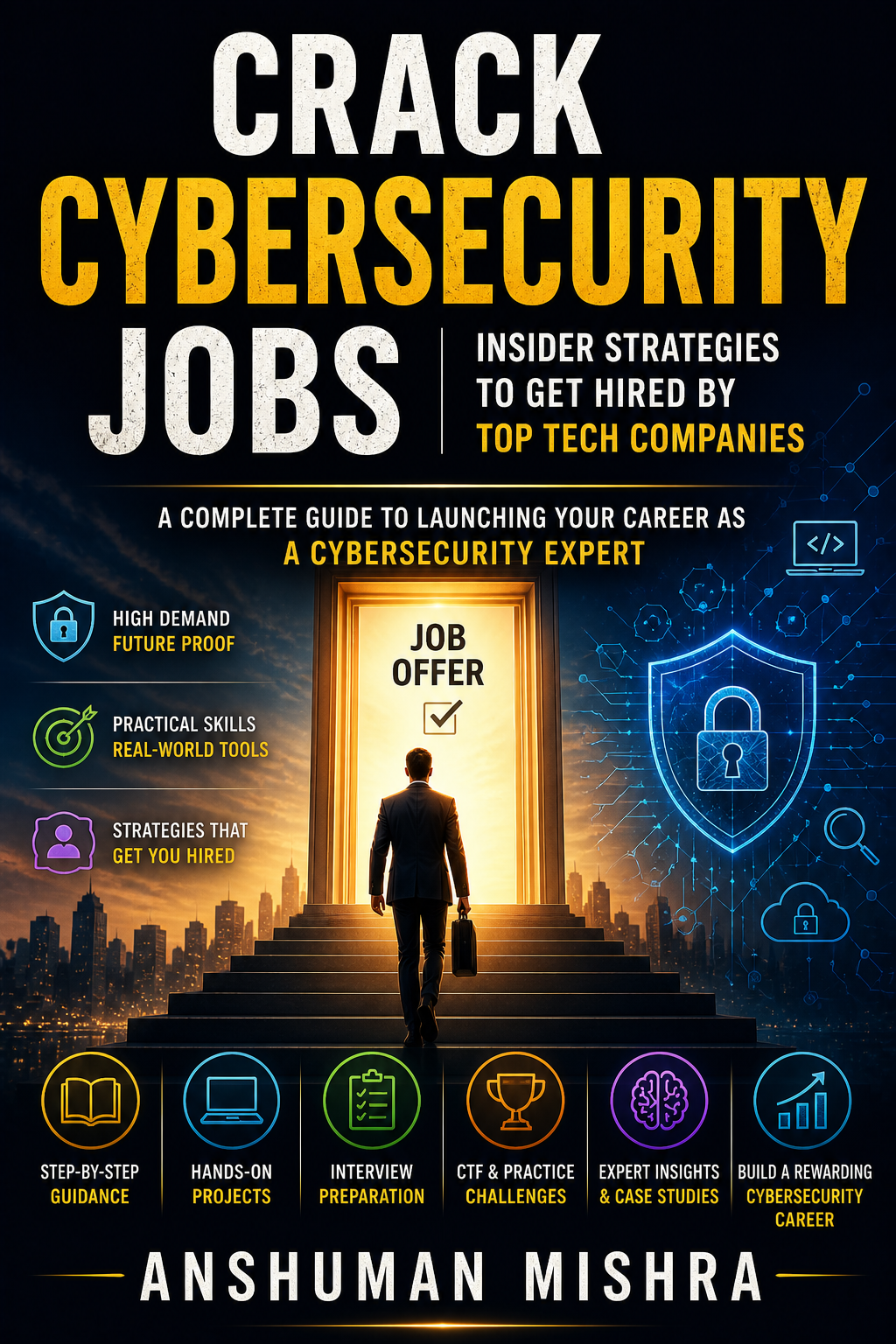
Crack Cybersecurity Jobs: Insider Strategies to Get Hired by Top Tech Companies
A Complete Guide to Launching Your Career as a Cybersecurity Expert at Google, Amazon, Microsoft, Cisco, IBM & More
Cybersecurity has become one of the most important technology disciplines in the modern digital economy. As organizations increasingly depend on cloud platforms, software, networks, data, and connected systems, the need for professionals who can identify risks, protect infrastructure, investigate incidents, and build secure environments continues to grow.
But becoming employable in cybersecurity requires more than knowing security terminology.
Candidates need a combination of technical foundations, practical experience, security tools, projects, certifications, communication skills, interview preparation, and a strong professional portfolio.
Crack Cybersecurity Jobs: Insider Strategies to Get Hired by Top Tech Companies provides a structured career roadmap that connects cybersecurity learning with the practical requirements of the modern job market.
The book takes readers from career exploration and foundational skills to hands-on projects, resume building, interviews, coding, CTF preparation, cloud security, certifications, and long-term professional development.
PART I — KICKSTARTING YOUR CYBERSECURITY CAREER
Chapter 1: The Cybersecurity Career Boom
The book begins by exploring the rapidly changing cybersecurity employment landscape.
This chapter examines:
- Global demand for cybersecurity professionals
- Major cybersecurity career opportunities
- Industries hiring security professionals
- Technology and cloud security roles
- Finance and banking security
- Healthcare cybersecurity
- Enterprise security
- Defense-related security careers
- Career growth and long-term employability
Readers gain an overview of the cybersecurity ecosystem and the types of skills organizations commonly seek.
Chapter 2: Career Tracks in Cybersecurity
Cybersecurity is not a single career path.
This chapter introduces different specialization areas, including:
- Security Analyst
- SOC Analyst
- Penetration Tester
- Security Engineer
- Cloud Security
- Governance, Risk, and Compliance
- Security Operations
- Defensive Security
- Offensive Security
The chapter helps readers compare different career tracks and identify pathways that align with their interests, strengths, and existing technical background.
PART II — CORE SKILLS & FOUNDATIONS
Chapter 3: Essential Cybersecurity Skills
Strong cybersecurity professionals need a solid technical foundation.
This chapter covers essential concepts including:
- Computer networking
- TCP/IP
- DNS
- Ports and protocols
- Linux security fundamentals
- Windows security fundamentals
- Firewalls
- Intrusion Detection and Prevention
- Encryption
- Authentication
- Access control
The objective is to build the conceptual foundation required for more advanced cybersecurity work.
Chapter 4: Hands-On Tools That Top Companies Expect
Cybersecurity professionals work with a wide range of tools for analysis, testing, monitoring, and investigation.
This chapter introduces the role of tools such as:
- Wireshark
- Nmap
- Metasploit
- Burp Suite
- SIEM platforms
- Splunk
- ELK Stack
- OSINT tools
- Threat-intelligence platforms
The focus is on understanding what these categories of tools do and how they fit into legitimate security workflows, assessments, monitoring, and defensive operations.
Chapter 5: Build Your Home Lab & Projects Portfolio
Practical experience can make a significant difference when applying for cybersecurity roles.
This chapter explains how learners can develop a controlled cybersecurity learning environment using:
- Virtual machines
- Security-focused operating systems
- Isolated lab environments
- Security simulations
- Defensive monitoring exercises
- Vulnerability-analysis practice
- Documentation
- GitHub portfolios
The emphasis is on building safe, authorized practice environments where learners can develop technical skills without affecting real-world systems.
The chapter also explains how to document projects so recruiters can understand the candidate’s actual capabilities.
PART III — INTERVIEW STRATEGY & JOB HUNTING
Chapter 6: Building a Powerful Cybersecurity Resume
A strong technical profile needs to be communicated effectively.
This chapter explores:
- ATS-friendly resumes
- Technical skills
- Project descriptions
- Certifications
- Security tools
- Quantifying achievements
- GitHub links
- LinkedIn profiles
- Portfolio presentation
Readers learn how to transform technical learning into resume points that communicate measurable skills and practical experience.
Chapter 7: Cracking HR Interviews
Technical knowledge is only one part of the hiring process.
This chapter covers:
- Behavioral interview questions
- STAR-style response structures
- Communication skills
- Teamwork
- Problem-solving
- Cultural fit
- Ethics
- Integrity
- Compliance
- Professional responsibility
Cybersecurity professionals often handle sensitive systems and information, making trust, ethics, and responsible behavior especially important.
Chapter 8: Technical Interviews at Top Companies
Cybersecurity technical interviews can test both fundamentals and practical reasoning.
This chapter examines common interview themes such as:
- Network security
- Firewall concepts
- Log analysis
- Authentication
- Vulnerability identification
- Risk assessment
- Security controls
- Incident scenarios
- Vulnerability mitigation
The goal is to help candidates explain why a security problem exists and how it can be addressed, rather than simply memorizing definitions.
Chapter 9: Coding for Cybersecurity
Programming and scripting can significantly improve cybersecurity productivity.
This chapter introduces:
- Python fundamentals
- Bash scripting
- PowerShell
- Automation concepts
- Log processing
- Security-oriented scripting
- Mini-project development
The book presents coding as a practical skill for automating repetitive tasks, analyzing information, and supporting security operations.
Chapter 10: Assessment Rounds & Capture The Flag
Many cybersecurity learning and assessment environments use practical challenges.
This chapter explains:
- Security assessment formats
- Practical interview rounds
- CTF concepts
- Problem-solving approaches
- Documentation
- Time management
- Safe practice environments
It also introduces learning platforms such as:
- TryHackMe
- Hack The Box
- OverTheWire
The focus is on developing analytical thinking and learning how to approach security problems systematically.
PART IV — SPECIALIZATIONS & INDUSTRY INSIGHTS
Chapter 11: Cybersecurity in the Cloud
Cloud computing has transformed enterprise infrastructure—and cloud security has become a major specialization.
This chapter introduces security concepts across:
- AWS
- Microsoft Azure
- Google Cloud
- Identity and Access Management
- Cloud encryption
- Logging
- Monitoring
- Secure configuration
- Cloud security best practices
Readers also explore common themes that may appear in cloud-security interviews.
Chapter 12: Offensive vs Defensive Security Roles
Cybersecurity includes both offensive and defensive perspectives.
This chapter explains:
Red Team → Identify weaknesses through authorized security testing
Blue Team → Detect, investigate, and defend against threats
Readers explore:
- Red-team roles
- Blue-team roles
- Security operations
- Threat detection
- Attack-and-defense concepts
- Security simulations
- Adversarial thinking
- Defensive thinking
The objective is to understand how attackers may think while maintaining a professional focus on authorized testing and effective defense.
Chapter 13: Certifications That Help You Get Hired
Certifications can complement practical experience and demonstrate structured knowledge.
This chapter discusses certifications and certification pathways such as:
- CompTIA Security+
- CEH
- OSCP
- CISSP
- CISA
The chapter examines how candidates can select certifications according to their experience level and intended career specialization.
It also emphasizes that certifications work best when combined with projects, practical skills, and demonstrable knowledge.
PART V — STAND OUT & LEVEL UP
Chapter 14: Case Studies — How They Got Hired
Learning from successful career journeys can help candidates identify what makes a cybersecurity profile stand out.
This chapter examines:
- Candidate profiles
- Technical projects
- Certifications
- Portfolio development
- Interview preparation
- Communication
- Hiring considerations
- Lessons from cybersecurity recruitment
The focus is on identifying transferable strategies rather than assuming that one career path works for everyone.
Chapter 15: The Mindset of a Cybersecurity Expert
Technical skills can become outdated. A strong cybersecurity career therefore requires continuous learning.
The final chapter focuses on developing the mindset of a cybersecurity professional.
Key qualities include:
- Curiosity
- Critical thinking
- Analytical reasoning
- Continuous learning
- Responsible experimentation
- Security awareness
- Problem-solving
- Adaptability
The chapter also discusses ways to stay informed through:
- Security blogs
- Research publications
- Professional communities
- Security conferences
- Bug-bounty ecosystems
- Learning platforms
- Industry news
The goal is to develop a habit of learning rather than treating cybersecurity as a one-time subject.
Key Topics Covered
- Cybersecurity Careers
- Cybersecurity Jobs
- Security Analyst
- SOC Analyst
- Penetration Testing
- Security Engineering
- Cloud Security
- Network Security
- Linux Security
- Windows Security
- Firewalls
- IDS/IPS
- Encryption
- Authentication
- Wireshark
- Nmap
- Metasploit
- Burp Suite
- SIEM
- Splunk
- ELK Stack
- OSINT
- Threat Intelligence
- Cybersecurity Home Labs
- GitHub Security Portfolio
- Cybersecurity Resume
- ATS Resume Optimization
- Cybersecurity Interviews
- Python for Cybersecurity
- CTF Preparation
- Cloud Security
- Cybersecurity Certifications
From Learning to Getting Hired
One of the central ideas of this book is that cybersecurity career preparation should connect multiple elements:
Learn → Practice → Build → Document → Showcase → Interview → Grow
Learning networking without applying it can leave gaps.
Learning security tools without understanding the underlying concepts can limit practical ability.
Collecting certifications without projects may make it difficult to demonstrate real-world skills.
The book therefore encourages readers to build a balanced profile combining fundamentals, hands-on practice, projects, communication, and professional presentation.
Building a Cybersecurity Portfolio
A strong cybersecurity portfolio can demonstrate what a candidate can actually do.
Potential portfolio components include:
- Security lab projects
- Network-analysis exercises
- Log-analysis projects
- Security automation scripts
- Defensive monitoring demonstrations
- Cloud-security projects
- CTF write-ups
- Security documentation
- Research summaries
The emphasis should remain on ethical, authorized, and safely documented work.
Preparing for Top-Tier Technology Companies
Technology companies can use multiple stages to evaluate cybersecurity candidates.
Depending on the role, candidates may encounter:
- Resume screening
- Recruiter discussions
- Technical interviews
- Practical assessments
- Coding or scripting questions
- Security scenarios
- Behavioral interviews
- Team discussions
The book helps readers prepare for these different dimensions rather than focusing only on technical definitions.
Why This Book Matters
Cybersecurity is not simply a technical profession. It combines:
Technology + Risk + Analysis + Communication + Ethics + Continuous Learning
Organizations need professionals who can understand technical systems while also thinking about business impact, user safety, compliance, and organizational risk.
This book provides a career-oriented framework for developing those capabilities.
Who Should Read This Book?
Crack Cybersecurity Jobs is particularly useful for:
- B.Tech students
- MCA students
- M.Tech students
- Computer Science students
- IT professionals
- Fresh graduates
- Career switchers
- Aspiring cybersecurity analysts
- SOC analyst candidates
- Security engineering aspirants
- Cloud security learners
- Ethical security-testing learners
- Cybersecurity certification candidates
- Self-learners
Build Skills. Build Projects. Build Your Career.
The cybersecurity industry continues to evolve as organizations adopt cloud computing, AI, automation, connected systems, and increasingly complex digital infrastructure.
This creates opportunities for professionals who are willing to develop strong fundamentals, practice responsibly, build evidence of their skills, and continue learning.
Crack Cybersecurity Jobs: Insider Strategies to Get Hired by Top Tech Companies is designed to help readers turn cybersecurity knowledge into a structured career-development plan.
Learn cybersecurity. Practice responsibly. Build your portfolio. Prepare for interviews. Start your cybersecurity career.

Reviews
There are no reviews yet.