Description
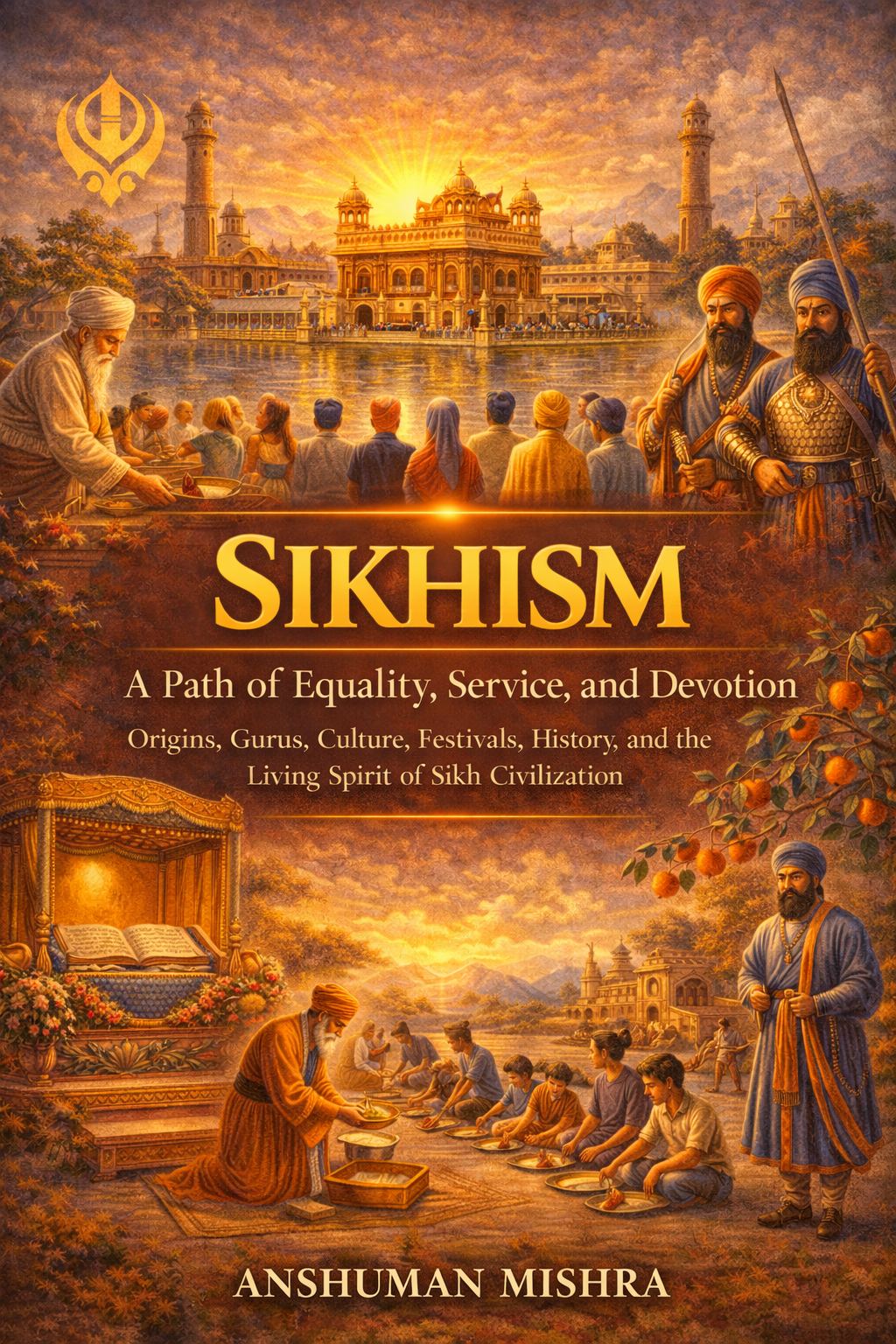
Sikhism: A Path of Equality, Service, and Devotion is a comprehensive, accessible, and respectful introduction to Sikhism as a spiritual, cultural, historical, and civilizational tradition.
The book explores Sikhism through its central principles of equality, devotion, honest work, selfless service, compassion, courage, justice, humility, and community responsibility.
Rather than presenting Sikhism merely as a collection of religious beliefs, this book examines it as a way of life in which spirituality and ethical action are closely connected.
Written for students, educators, general readers, and anyone interested in Sikh culture and history, the book provides a structured journey from the origins of Sikhism to its contemporary global presence.
What You Will Learn
Readers will explore:
- Origins and historical background of Sikhism
- Punjab’s cultural and social environment
- Life and teachings of Guru Nanak Dev Ji
- The Udasis and spiritual journeys
- Naam, Kirat, and Vand Chakna
- The Ten Sikh Gurus
- Guru Granth Sahib
- Shabad and Sikh spiritual thought
- One Supreme Reality
- Sikh ethics and moral values
- Seva and selfless service
- Equality and human dignity
- Khalsa Panth
- Sikh identity and discipline
- Amrit and spiritual commitment
- Gurdwara traditions
- Sikh prayers and devotional practices
- Gurpurabs and Vaisakhi
- Sacred places and historical gurdwaras
- Langar and universal brotherhood
- Sikh migration and global communities
- Sikh history and resilience
- Sikh personalities and contributors
- Punjabi language and culture
- Sikh music and Kirtan
- Sikh food traditions
- Sikhism in the modern world
Sikhism as a Living Spiritual Tradition
The book begins by introducing Sikhism as a living spiritual tradition and a way of life.
Its central themes include:
Devotion.
Equality.
Honest living.
Service.
Humility.
Justice.
Compassion.
Community.
The book explains how these values can be expressed through both spiritual practices and everyday actions.
Origins and Historical Background
Readers are introduced to the historical and cultural environment of Punjab in which Sikhism emerged.
The book provides an accessible account of the social and spiritual circumstances surrounding the emergence of Sikh teachings while maintaining an educational and respectful tone.
The focus remains on understanding the development of Sikh identity, institutions, values, and community life.
Guru Nanak Dev Ji
A major section is dedicated to Guru Nanak Dev Ji, the founder of the Sikh tradition.
The book explores:
- His early life
- Spiritual awakening
- Udasis
- Travels and teachings
- Vision of equality
- Compassion and human dignity
- Importance of remembrance of the Divine
- Honest work
- Sharing with others
The principles commonly summarized through Naam Japna, Kirat Karni, and Vand Chakna are discussed as practical dimensions of spiritual and ethical living.
The Ten Sikh Gurus
The book provides a structured overview of the Ten Sikh Gurus and their contributions to Sikh spiritual and community development.
Readers learn how the Sikh Gurus contributed to:
- Spiritual education
- Community organization
- Social development
- Ethical living
- Institutional development
- Literary and devotional traditions
- Sikh identity
The concept of Guruship is explained as an important part of Sikh spiritual continuity.
Guru Granth Sahib
The Guru Granth Sahib occupies a central position in Sikh religious life.
The book introduces readers to:
- Its compilation
- Its poetic character
- Its linguistic diversity
- Spiritual themes
- Shabad
- Devotional singing
- Recitation
- Reverence and daily practice
The discussion emphasizes themes such as humility, truth, devotion, compassion, equality, and ethical living.
Core Beliefs of Sikhism
The book introduces fundamental Sikh concepts in accessible language.
These include:
- One Supreme Reality
- Devotion
- Truth
- Humility
- Self-discipline
- Equality
- Ethical conduct
- Service
- Spiritual liberation
Readers are encouraged to understand Sikh philosophy as a tradition that connects spiritual awareness with responsible action.
Sikh Ethics and Seva
One of the most important themes explored in the book is Seva, or selfless service.
Sikh teachings emphasize helping others without seeking personal recognition or reward.
Seva can take many forms, including:
- Feeding people
- Community assistance
- Humanitarian relief
- Volunteering
- Supporting those in need
- Helping during emergencies
- Community development
The book presents Seva as a practical expression of compassion and spiritual responsibility.
Equality and Human Dignity
Equality is a central theme of the book.
Sikh thought emphasizes the dignity of all human beings, and the book explores this principle through:
- Social inclusion
- Community participation
- Equality of men and women
- Shared worship
- Langar
- Service
- Respect for human beings
The book explains how equality becomes meaningful when it is practiced through everyday community life.
The Khalsa Panth
The formation of the Khalsa Panth represents an important development in Sikh history.
The book introduces:
- Formation of the Khalsa
- Spiritual commitment
- Initiation
- Sikh identity
- Symbols
- Discipline
- Moral responsibility
- Saint-soldier ideal
The focus is on understanding the spiritual and ethical significance of Khalsa identity.
Amrit and Spiritual Commitment
The book provides an educational introduction to Amrit and its role within Sikh tradition.
Readers learn about:
- Meaning of Amrit
- Initiation
- Commitment
- Vows
- Code of conduct
- Personal responsibility
- Spiritual discipline
The emphasis remains on understanding the significance of commitment within Sikh religious life.
Sikh Daily Spiritual Life
Sikh spiritual practice can include prayer, meditation, remembrance of the Divine, community worship, and ethical work.
The book explores:
- Daily prayers
- Meditation
- Gurdwara participation
- Kirtan
- Community worship
- Family life
- Honest work
- Spiritual discipline
This section demonstrates how Sikh spirituality connects inner devotion with everyday responsibility.
Sikh Festivals and Religious Observances
Festivals and commemorative occasions play an important role in Sikh community life.
The book explores:
Gurpurabs
Important occasions commemorating events associated with the Sikh Gurus.
Vaisakhi
A significant festival with important religious and historical associations within Sikh tradition.
Community Celebrations
Festivals are also presented as opportunities for:
- Remembrance
- Learning
- Worship
- Community service
- Cultural expression
- Unity
Sacred Places and Gurdwaras
Gurdwaras are important centers of Sikh worship, community gathering, learning, and service.
The book explores the concept of sacred space and introduces readers to historical Sikh sites and gurdwaras.
Topics include:
- Architecture
- Symbolism
- Worship
- Pilgrimage
- Community service
- Learning centers
Langar — A Tradition of Universal Brotherhood
One of the most recognizable Sikh institutions is Langar, the community kitchen where meals are provided without discrimination.
The book explores Langar through the principles of:
- Equality
- Hospitality
- Service
- Sharing
- Community
- Human dignity
Readers learn how Langar transforms the principle of equality into a practical community experience.
The tradition also demonstrates how ordinary acts such as preparing, serving, and sharing food can become expressions of spiritual service.
Sikhism Around the World
Sikh communities are now found across many regions of the world.
The book examines:
- Sikh migration
- Community institutions
- Gurdwaras abroad
- Cultural preservation
- Punjabi language
- Sikh identity
- Contributions to host societies
It also discusses how Sikh communities maintain cultural traditions while participating in diverse contemporary societies.
Sikh History and Courage
The book presents Sikh history through themes of resilience, courage, dignity, justice, and ethical responsibility.
Historical challenges are discussed in their broader context, with emphasis on the values and principles that shaped Sikh community responses.
Rather than glorifying conflict, the book focuses on moral courage, sacrifice, perseverance, and the protection of human dignity.
Influential Sikh Personalities
The book also introduces important figures connected with Sikh history, scholarship, literature, education, arts, social service, and contemporary achievements.
These personalities demonstrate the diverse contributions of Sikh individuals to:
- Spiritual thought
- Education
- Literature
- Public service
- Arts
- Business
- Science
- Humanitarian work
Punjabi Culture and Sikh Heritage
Sikh heritage is closely connected with the wider cultural history of Punjab.
The book explores:
- Punjabi language
- Literature
- Traditional clothing
- Sikh symbols
- Music
- Kirtan
- Folk traditions
- Food
- Community celebrations
These cultural elements demonstrate how religious identity and regional heritage can develop together while retaining distinctive characteristics.
Sikh Food and Community Traditions
Food has an important role in Sikh community life, particularly through Langar and shared meals.
The book introduces the cultural significance of:
- Community kitchens
- Shared meals
- Hospitality
- Punjabi cuisine
- Gratitude
- Service
Food is presented not merely as cuisine but as an opportunity for community participation and human connection.
Sikhism in the Modern World
The final section examines Sikhism within contemporary society.
Topics include:
- Education
- Leadership
- Youth
- Cultural preservation
- Community service
- Global Sikh identity
- Inter-community harmony
- Humanitarian work
The book explores how traditional Sikh values can continue to provide meaningful frameworks for ethical conduct and community responsibility in a changing world.
Who Is This Book For?
This book is suitable for:
- Students of religious studies
- Students of history and culture
- Educators and teachers
- Researchers
- General readers
- Readers interested in Sikhism
- Readers interested in Punjab and Punjabi culture
- Readers interested in world religions
- Readers interested in spirituality and ethics
- Libraries and educational institutions
- Readers interested in intercultural understanding
No previous academic knowledge of Sikhism is required.
Key Highlights
✔ Introduction to Sikhism
✔ Sikh history and origins
✔ Guru Nanak Dev Ji
✔ Udasis and spiritual journeys
✔ Naam, Kirat, and Vand Chakna
✔ Ten Sikh Gurus
✔ Guru Granth Sahib
✔ Shabad and Sikh spirituality
✔ Sikh philosophy
✔ One Supreme Reality
✔ Equality and human dignity
✔ Sikh ethics
✔ Seva and selfless service
✔ Honest work
✔ Sikh community life
✔ Khalsa Panth
✔ Sikh identity
✔ Amrit and initiation
✔ Gurdwara traditions
✔ Sikh prayers and meditation
✔ Gurpurabs
✔ Vaisakhi
✔ Sikh sacred places
✔ Langar
✔ Sikh migration and global communities
✔ Sikh history and resilience
✔ Sikh personalities
✔ Punjabi culture
✔ Punjabi language and literature
✔ Kirtan and Sikh music
✔ Sikh food traditions
✔ Sikhism in the modern world
A Respectful and Educational Approach
This book has been designed with cultural sensitivity, respect, and educational integrity.
Its purpose is to help readers understand Sikhism through its own history, teachings, institutions, practices, and cultural traditions.
It does not seek to rank religions or engage in religious debate. Instead, it encourages readers to learn about Sikh civilization with openness, curiosity, and respect.
Final Perspective
Sikhism: A Path of Equality, Service, and Devotion presents a structured journey through the spiritual and cultural world of Sikhism.
From Guru Nanak Dev Ji and the Ten Gurus to Guru Granth Sahib, Khalsa, Seva, Langar, Sikh festivals, Punjabi culture, and the global Sikh community, the book offers readers a broad introduction to a living tradition.
At its heart, the book explores a powerful combination of values:
Remember the Divine.
Live honestly.
Share with others.
Serve selflessly.
Stand for dignity and justice.
Treat humanity with equality and compassion.




Reviews
There are no reviews yet.