Description
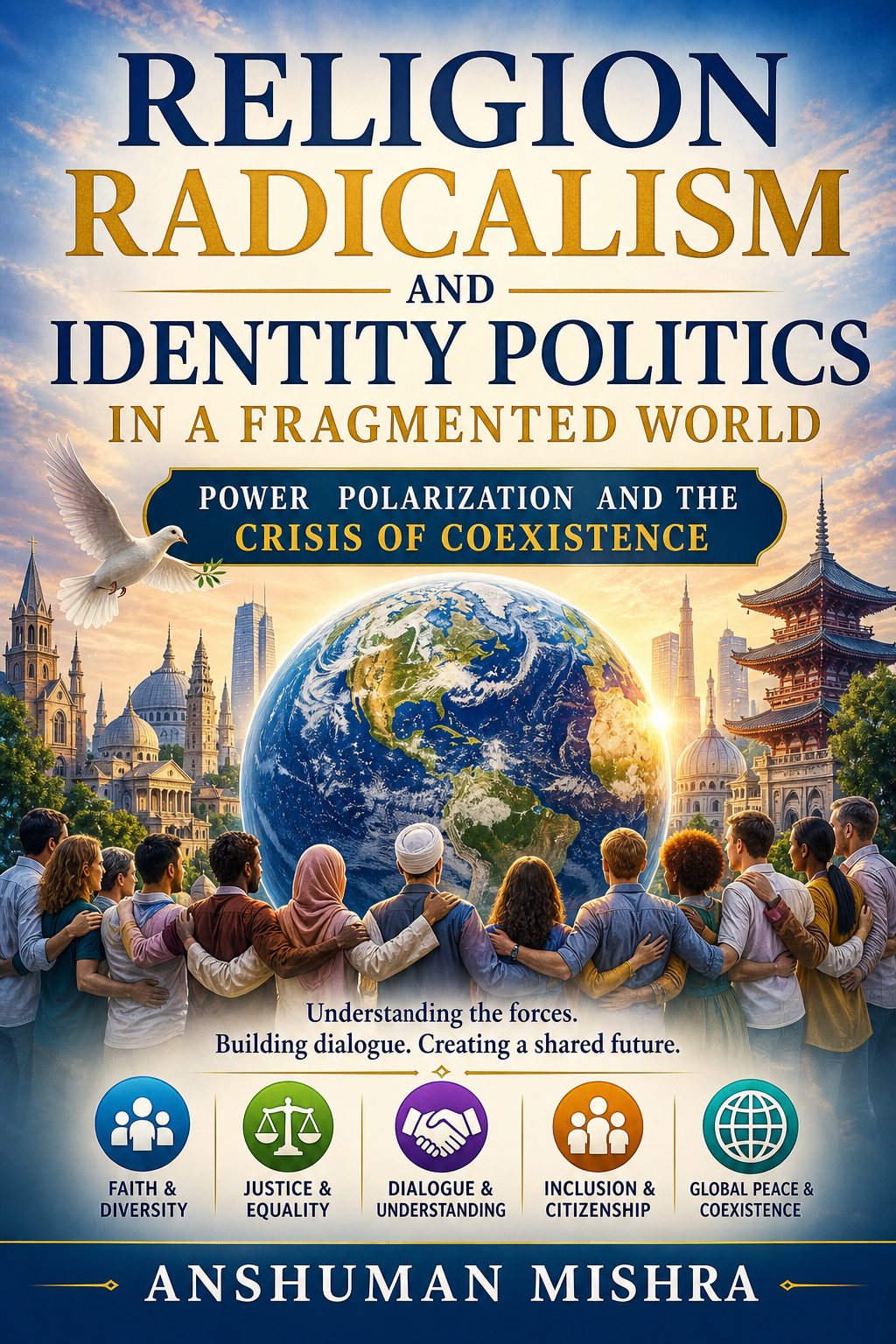
Religion, Radicalism, and Identity Politics in a Fragmented World
Power, Polarization, and the Crisis of Coexistence
Religion, political identity, nationalism, migration, economic insecurity, and digital communication increasingly intersect in the modern political landscape.
In many societies, religious and cultural identities can provide community, meaning, solidarity, and social support. At the same time, political actors may mobilize identity for electoral or ideological purposes, while economic insecurity, social exclusion, misinformation, and polarization can deepen divisions.
Religion, Radicalism, and Identity Politics in a Fragmented World examines these complex relationships from an interdisciplinary perspective, drawing on political science, sociology, psychology, constitutional studies, international relations, media studies, and conflict analysis.
The book does not treat religion or identity as inherently political or radical. Instead, it examines the circumstances under which identities become politicized, contested, or associated with conflict—and explores pathways toward democratic coexistence.
Chapter 1: Religion and Power in the Modern Political Landscape
The book begins by examining religion as a social and political institution.
This chapter explores:
- Religion as a social institution
- Faith and political authority
- Historical relationships between religion and power
- The transformation of religious identity into political identity
- Religion in contemporary public life
- Political mobilization through belief
- Religion as a source of legitimacy and resistance
The chapter establishes the foundation for understanding why religion continues to influence public institutions, political movements, and social identities.
Chapter 2: Understanding Radicalism Beyond Stereotypes
Radicalism is often used broadly in political and media discussions, but the term has multiple meanings.
This chapter distinguishes between:
- Radical thought
- Political activism
- Ideology
- Extremism
- Political violence
- Social change movements
It also explores:
- Psychological dimensions of radicalization
- Marginalization
- Political alienation
- Social grievances
- Media narratives
- Public perceptions
The emphasis is on understanding radicalization as a complex social and political process rather than attributing it to a single religion, ethnicity, or community.
Chapter 3: Identity Politics — Origins and Evolution
Identity has become an important dimension of modern democratic politics.
This chapter examines:
- Identity as a political concept
- Ethnicity
- Culture
- Collective memory
- Post–Cold War identity movements
- Electoral politics
- Political representation
- Polarization
The book considers both sides of identity politics: its potential to provide representation for historically marginalized groups and its potential to deepen social divisions when political competition becomes organized primarily around group identities.
Chapter 4: Economic Insecurity and Identity-Based Movements
Economic conditions can influence political attitudes and social relationships.
This chapter explores:
- Global inequality
- Economic insecurity
- Unemployment
- Political grievances
- Cultural anxiety
- Economic decline
- Scapegoating
- Urban–rural divisions
- Economic stress and radicalization
The chapter investigates how material insecurity can interact with cultural and political narratives, creating conditions in which identity-based movements gain influence.
Chapter 5: Political Use of Religion by the State
Governments and political movements have historically used religious narratives in different ways.
This chapter examines:
- Religion and national identity
- State-supported religious narratives
- Electoral mobilization
- Religious influence on law
- Governance and faith
- Public policy
- Risks associated with politicizing religious belief
The discussion focuses on the relationship between political authority and religious legitimacy while considering the importance of constitutional principles and equal citizenship.
Chapter 6: Non-State Actors and Religious Mobilization
Religious organizations and movements can operate independently of the state and may provide community services, education, charity, or political mobilization.
This chapter explores:
- Religious movements
- Charismatic leadership
- Religious authority
- Transnational networks
- Social services
- Ideological influence
- Religious soft power
- Accountability and regulation
The chapter considers both the constructive social roles and governance challenges associated with powerful non-state organizations.
Chapter 7: Social Polarization in Multicultural Societies
Diversity can enrich societies, but rapid social and demographic change can also generate uncertainty and political tensions.
This chapter examines:
- Diversity and social trust
- Cultural anxiety
- Demographic change
- Majority–minority relationships
- Political rhetoric
- Education and polarization
- Media environments
- Democratic management of diversity
The chapter emphasizes the importance of institutional fairness, equal citizenship, dialogue, and social trust.
Chapter 8: Civilizational Stress and Competing Worldviews
Globalization has created unprecedented cultural interaction while also generating debates about tradition, modernity, identity, and values.
This chapter explores:
- Civilizational identity
- Tradition and modernity
- Globalization
- Cultural resistance
- Values conflicts
- International narratives
- Dialogue and confrontation
Rather than presenting civilizations as fixed or naturally opposed entities, the chapter examines how political actors construct and use civilizational narratives.
Chapter 9: Religion, Law, and Constitutional Debates
The relationship between religion and constitutional government varies significantly across societies.
This chapter explores:
- Secularism
- Religious freedom
- State authority
- Legal pluralism
- Human rights
- Faith-based laws
- Constitutional identity
- Citizenship
The central challenge is how democratic societies can protect freedom of belief while maintaining equality before the law and common civic institutions.
Chapter 10: Media, Technology, and Radical Narratives
Digital platforms have transformed political communication.
Information can now spread rapidly across borders, while recommendation systems and online communities can influence what people see and discuss.
This chapter examines:
- Digital identity formation
- Algorithmic polarization
- Online communities
- Misinformation
- Religious narratives online
- Emotional politics
- Digital propaganda
- Freedom of expression
- Platform governance
The chapter considers the difficult balance between addressing harmful content and protecting legitimate political and religious expression.
Chapter 11: Youth, Identity, and Political Mobilization
Young people are important participants in contemporary political and social movements.
This chapter explores:
- Generational identity
- Youth political participation
- Radicalization risk factors
- Education
- Ideological formation
- Social media
- Faith and activism
- Protest movements
- Constructive civic engagement
The focus is on understanding the conditions that encourage democratic participation, critical thinking, and peaceful political engagement.
Chapter 12: Gender, Religion, and Identity Politics
Gender can become an important dimension of religious, cultural, and political debates.
This chapter examines:
- Gender roles
- Religious traditions
- Women in identity-based movements
- Political control of social norms
- Family and power
- Gender equality
- Reform
- Resistance
- Dialogue
The chapter approaches these issues through the perspectives of social institutions, political power, rights, and cultural change.
Chapter 13: Migration, Diaspora, and Identity Conflict
Migration can transform both migrant communities and host societies.
This chapter explores:
- Migration
- Cultural transformation
- Diaspora politics
- Identity preservation
- Integration
- Social isolation
- Host-society responses
- Multicultural policy
The chapter considers the challenges of balancing cultural identity with participation in shared civic institutions.
Chapter 14: Religion and Nationalism
Religion and nationalism have sometimes interacted closely in the construction of national identity.
This chapter explores:
- Sacred narratives
- Nation-building
- Historical memory
- Cultural symbols
- National myths
- Political loyalty
- Nationalism and pluralism
- Long-term social consequences
The chapter examines how religious and cultural narratives can contribute to social cohesion while also creating exclusionary political boundaries.
Chapter 15: Radicalism, Security, and the State
Governments face the difficult task of protecting citizens while preserving civil liberties.
This chapter examines:
- Internal security
- Ideological threats
- Surveillance
- Civil liberties
- Preventive policies
- Law enforcement
- Community-based approaches
- Institutional trust
The central issue is the balance between security and freedom.
The book considers why effective security policies require not only enforcement but also community trust, proportionality, accountability, and respect for fundamental rights.
Chapter 16: Global Institutions and Identity Conflicts
Identity-based conflicts frequently cross national borders.
International organizations therefore face complex questions involving:
- Human rights
- Religious freedom
- Cultural diversity
- International norms
- Diplomacy
- Conflict mediation
- Multilateral governance
- Institutional reform
This chapter explores both the potential and limitations of global institutions in addressing identity-based political conflicts.
Chapter 17: Pathways to Social Cohesion
Understanding polarization is only one part of the challenge. Societies also need practical pathways toward coexistence.
This chapter examines:
- Inclusive citizenship
- Education for pluralism
- Interfaith dialogue
- Intercultural dialogue
- Economic inclusion
- Social stability
- Ethical leadership
- Institutional trust
The chapter emphasizes that social cohesion does not require everyone to share the same beliefs. Instead, democratic coexistence can be built around equal rights, shared civic responsibilities, mutual respect, and peaceful disagreement.
Chapter 18: Identity Politics in the 21st Century
The concluding chapter brings together the major themes of the book.
It examines:
- Lessons from global experiences
- The social cost of polarization
- Future trends in religion and politics
- Risks of continued fragmentation
- Opportunities for coexistence
- Shared civic identity
The conclusion argues that identity will remain an important part of 21st-century politics, but its political consequences will depend heavily on institutions, leadership, economic conditions, media environments, and the ability of societies to maintain dialogue across differences.
Key Topics Covered
- Religion and Politics
- Radicalism
- Extremism and Political Science
- Identity Politics
- Political Polarization
- Religious Identity
- Nationalism
- Cultural Identity
- Collective Memory
- Economic Inequality
- Political Grievance
- Social Trust
- Multiculturalism
- Migration and Diaspora
- Religious Freedom
- Secularism
- Constitutional Debates
- Human Rights
- Media and Politics
- Algorithmic Polarization
- Misinformation
- Youth Political Participation
- Gender and Religion
- Social Cohesion
- Interfaith Dialogue
- Intercultural Dialogue
- Global Governance
- Political Security
- Civil Liberties
- Peaceful Coexistence
A Balanced Approach to a Difficult Subject
The relationship between religion, politics, and identity is rarely simple.
Religion can be a source of meaning, community, charity, ethical reflection, and social solidarity. Political identity can give previously underrepresented communities a voice. At the same time, political actors can exploit identity divisions, and polarization can transform legitimate differences into antagonistic social boundaries.
Similarly, radical ideas can arise in many ideological and political contexts and should be analyzed without reducing complex processes to stereotypes about particular religious or cultural communities.
This book therefore approaches its subject through institutions, incentives, historical context, social psychology, economic conditions, media systems, and political behavior.
Why This Book Matters
Modern societies are becoming increasingly interconnected while also experiencing significant political and cultural fragmentation.
Social media allows people to communicate across borders, yet it can also create isolated information environments. Migration brings cultures into closer contact, while economic insecurity can intensify political anxiety. Democratic systems provide opportunities for representation, but identity-based competition can sometimes deepen polarization.
Understanding these tensions is essential for students, researchers, policymakers, educators, journalists, and citizens.
Who Should Read This Book?
This book is particularly useful for:
- Political Science students
- Sociology students
- International Relations students
- Law and Constitutional Studies students
- Social Science researchers
- Political analysts
- Policy professionals
- Journalists and media researchers
- Students of religion and society
- Researchers studying radicalization
- Students interested in identity politics
- Readers interested in contemporary geopolitics
Toward a Shared Civic Future
The central challenge of the 21st century may not be eliminating differences, but learning how to manage differences peacefully.
Religious beliefs, cultural identities, political ideologies, and national traditions will continue to shape societies.
The question is whether these differences become sources of permanent division—or whether democratic institutions can transform them into opportunities for dialogue, representation, cooperation, and mutual understanding.
Religion, Radicalism, and Identity Politics in a Fragmented World provides a structured framework for examining this challenge and exploring possible pathways toward a more inclusive and peaceful civic order.
Understand the divisions. Examine the causes. Strengthen dialogue. Build coexistence.

Reviews
There are no reviews yet.