Description
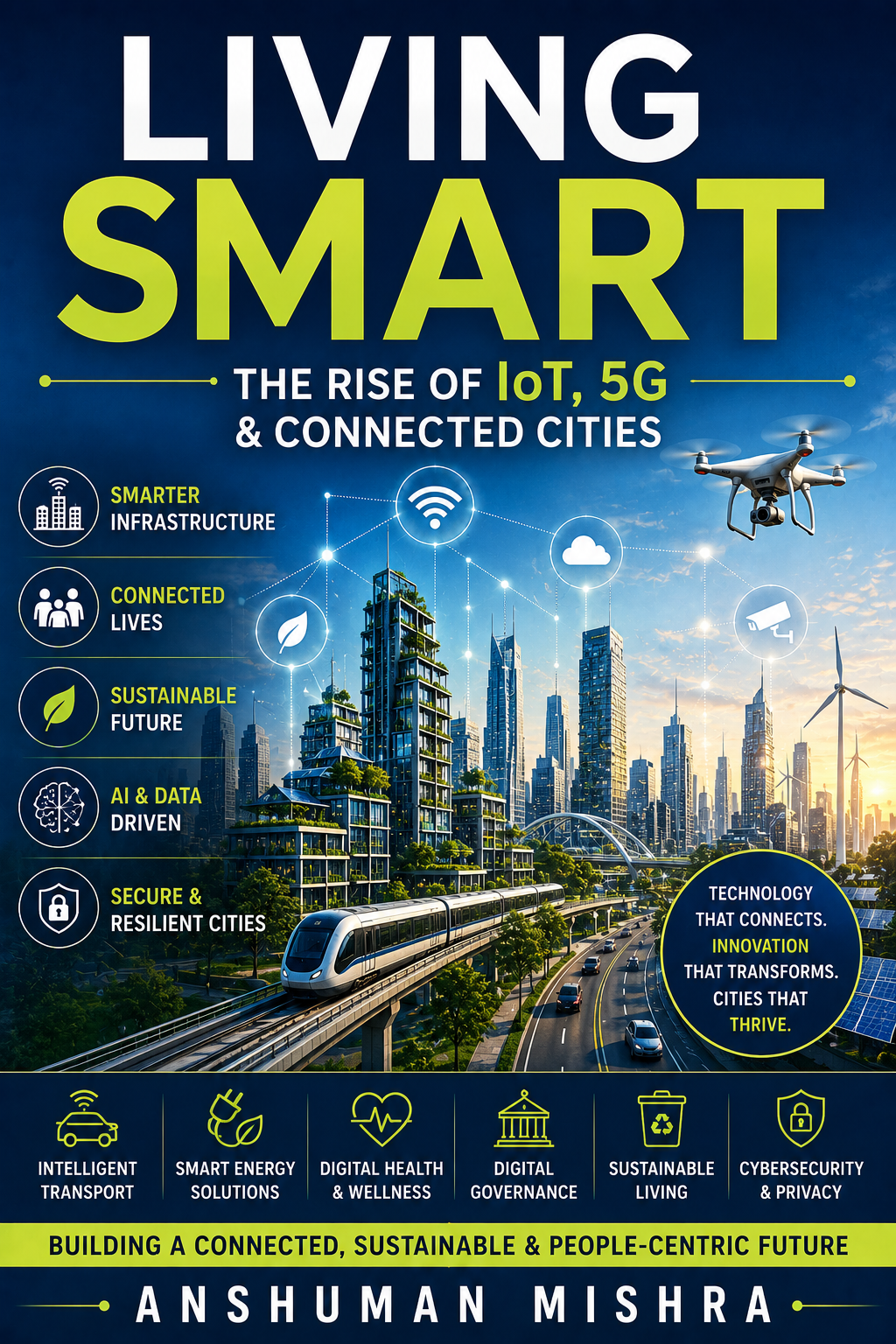
Living Smart: The Rise of IoT, 5G & Connected Cities
How Intelligent Technologies Are Transforming Urban Life, Infrastructure, and Sustainable Development
Cities around the world are undergoing an unprecedented digital transformation. Rapid urbanization, growing populations, climate challenges, and increasing demands for efficient public services have accelerated the adoption of intelligent technologies that are redefining how cities operate. Smart cities are no longer futuristic concepts—they are becoming the foundation of sustainable, connected, and data-driven urban living.
Living Smart: The Rise of IoT, 5G & Connected Cities provides a comprehensive exploration of the technologies, strategies, and innovations that are shaping the next generation of urban environments. Combining practical insights with emerging technologies, the book explains how the Internet of Things (IoT), fifth-generation (5G) communication networks, Artificial Intelligence (AI), Big Data, cloud computing, and intelligent infrastructure are transforming transportation, energy, governance, healthcare, public safety, and everyday life.
The book begins by introducing the concept of smart cities and tracing the evolution of modern urban infrastructure. Readers gain a clear understanding of how digital transformation, citizen-centric governance, sustainable planning, and technological innovation work together to create resilient and efficient cities capable of addressing twenty-first-century challenges.
A major focus of the book is the Internet of Things (IoT), often described as the digital nervous system of smart cities. The book explains IoT architecture, sensors, actuators, gateways, communication protocols, edge computing, cloud integration, and data collection systems while demonstrating practical applications in intelligent lighting, traffic management, parking systems, waste management, environmental monitoring, water conservation, and public utilities.
The role of 5G technology is explored as the communication backbone of connected cities. Readers discover how ultra-fast connectivity, low latency, and massive device connectivity enable autonomous transportation, remote healthcare, augmented and virtual reality applications, smart manufacturing, emergency response systems, and next-generation digital services.
Transportation receives extensive coverage through intelligent transportation systems (ITS), connected autonomous vehicles, electric vehicle infrastructure, adaptive traffic management, Mobility-as-a-Service (MaaS), and smart public transit. These technologies illustrate how digital innovation is improving mobility, reducing congestion, increasing safety, and enhancing urban efficiency.
Additional chapters examine smart energy systems, renewable energy integration, intelligent water management, environmental monitoring, digital governance, blockchain-enabled public services, AI-powered citizen engagement, smart buildings, home automation, cybersecurity, predictive maintenance, digital twins, urban analytics, and climate-resilient infrastructure.
Recognizing that technological advancement must be balanced with responsible governance, the book addresses important issues including cybersecurity, privacy protection, AI ethics, surveillance, data ownership, digital inclusion, interoperability, regulatory frameworks, and citizen rights in connected environments. Readers gain a balanced understanding of both the opportunities and challenges associated with smart city development.
The book also presents inspiring case studies from globally recognized smart cities including Singapore, Barcelona, Amsterdam, Dubai, Songdo, and India’s Smart Cities Mission. These real-world examples demonstrate how governments, businesses, researchers, and communities are collaborating to create innovative urban ecosystems that improve quality of life while supporting economic growth and environmental sustainability.
Inside This Book You’ll Discover
- Foundations and principles of Smart Cities
- Internet of Things (IoT) architecture and applications
- 5G communication technologies and digital connectivity
- Intelligent Transportation Systems (ITS) and smart mobility
- Connected Autonomous Vehicles and Electric Vehicle infrastructure
- Smart Energy Grids, Renewable Energy, and Sustainability
- AI, Big Data, Machine Learning, and Urban Intelligence
- Smart Buildings, Home Automation, and Digital Infrastructure
- E-Government, Digital Governance, and Citizen Engagement
- Environmental Monitoring and Climate-Resilient Cities
- Cybersecurity, Privacy, and Responsible Data Governance
- Digital Twins, Urban Analytics, and Smart Planning
- Global Smart City case studies and best practices
- Entrepreneurship, innovation, and business opportunities
- Future trends shaping connected and sustainable cities
Written in an accessible yet technically informative style, this book is ideal for students pursuing Computer Science, Information Technology, Electronics, Telecommunications, Civil Engineering, Urban Planning, Architecture, Data Science, Artificial Intelligence, Management, and Public Policy. It is equally valuable for engineers, technology professionals, urban planners, government officials, researchers, entrepreneurs, startup founders, and business leaders working in digital transformation and smart infrastructure.
Whether you are exploring IoT technologies, designing connected systems, developing smart city solutions, modernizing public services, investing in digital infrastructure, or simply interested in the future of urban living, Living Smart: The Rise of IoT, 5G & Connected Cities provides a practical roadmap for understanding the technologies driving tomorrow’s cities.
By combining technological innovation, sustainability, governance, business strategy, and human-centered design, this book demonstrates how connected technologies can create cities that are more intelligent, efficient, resilient, secure, and inclusive for future generations.


Reviews
There are no reviews yet.