Description
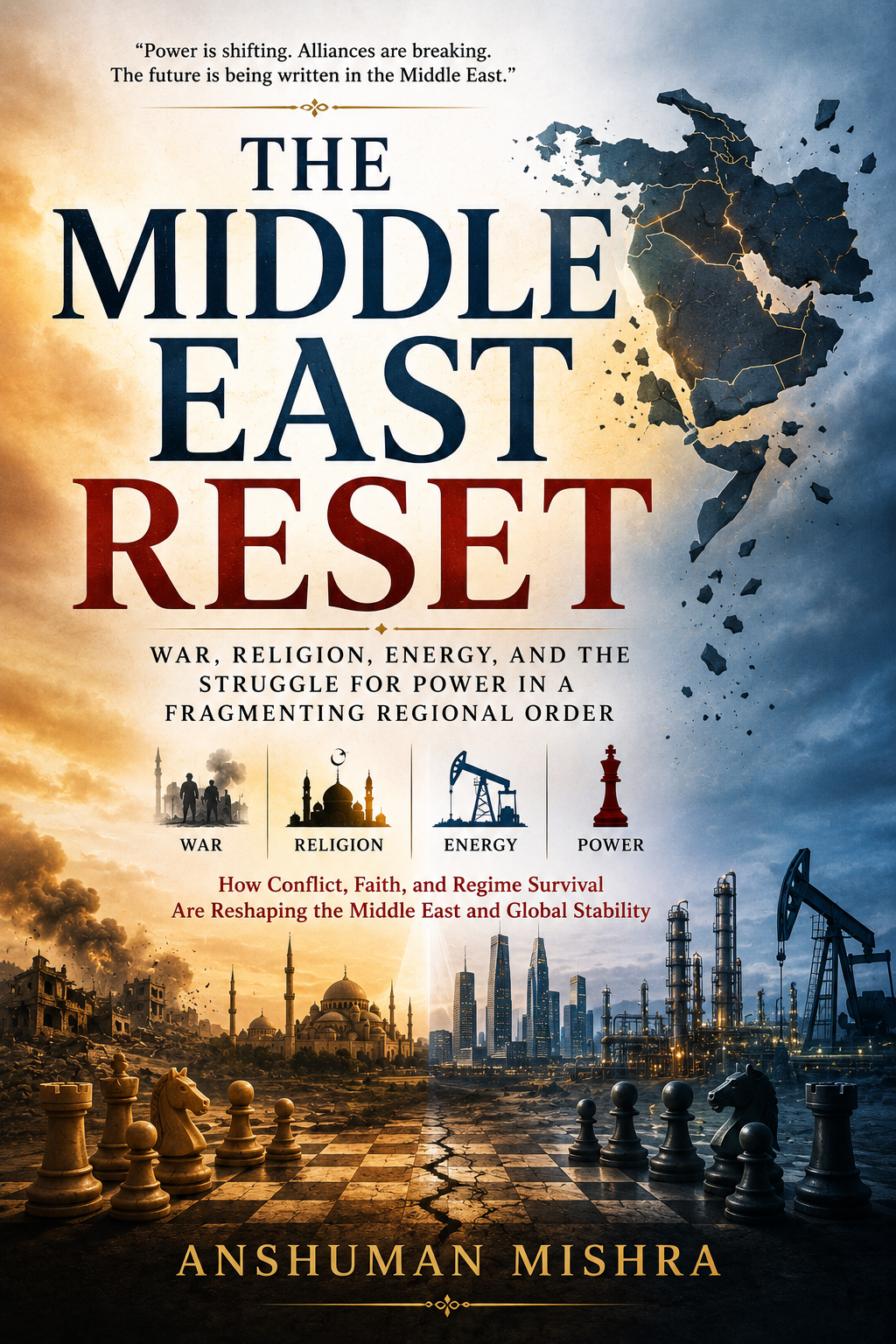
The Middle East Reset: War, Religion, Energy, and the Struggle for Power in a Fragmenting Regional Order
How Conflict, Faith, and Regime Survival Are Reshaping the Middle East and Global Stability
The Middle East remains one of the world’s most strategically significant regions, influencing international politics, global energy markets, regional security, migration, diplomacy, and economic stability. Its complex interaction of history, religion, governance, natural resources, and geopolitical competition continues to shape not only the region itself but also the broader international order.
The Middle East Reset: War, Religion, Energy, and the Struggle for Power in a Fragmenting Regional Order provides a comprehensive, research-based examination of the structural forces transforming the Middle East in the twenty-first century. Rather than focusing on isolated events, the book explores the deeper political, economic, historical, and institutional dynamics that influence regional stability, conflict, and long-term strategic change.
Beginning with the historical foundations of the modern Middle East, the book examines the legacy of colonial borders, post-independence state formation, Cold War rivalries, and evolving regional alliances. Readers gain a deeper understanding of how historical developments continue to influence present-day governance, security, and interstate relations.
A major theme throughout the book is the relationship between religion and political authority. The discussion explores how religious identity intersects with governance, public legitimacy, political movements, and state institutions while carefully distinguishing theological traditions from political strategies. It also examines sectarian dynamics, identity politics, and the role of religious narratives in regional competition without reducing complex political developments to religious differences alone.
The book analyzes prolonged conflicts, proxy warfare, civil wars, and the increasing role of non-state armed groups within the regional security environment. It explains how multiple domestic, regional, and international actors interact across overlapping conflicts, creating security challenges that extend beyond national borders. The discussion also explores ceasefire dynamics, conflict persistence, and the long-term consequences of fragmented political authority.
Energy geopolitics remains a central pillar of the analysis. Readers explore how oil, natural gas, strategic resources, and evolving global energy transitions continue to influence state policy, economic development, international partnerships, and geopolitical leverage. The book examines both the opportunities created by energy wealth and the structural challenges associated with economic diversification and changing global energy markets.
Political governance receives equally detailed attention through chapters examining regime resilience, institutional capacity, economic reform, demographic pressures, youth employment, public trust, state legitimacy, and long-term governance challenges. Rather than portraying political systems as static, the book explains how governments adapt to evolving domestic and international environments while balancing stability, reform, and security considerations.
Additional chapters explore migration, refugee movements, humanitarian pressures, media ecosystems, information environments, digital communication, security dilemmas, defense modernization, arms proliferation, regional diplomacy, international intervention, and future scenarios for political and economic transformation. Throughout the discussion, emphasis is placed on evidence-based analysis, comparative perspectives, and long-term structural trends.
The concluding chapters evaluate possible pathways for regional development by considering gradual reform, institutional adaptation, economic diversification, diplomatic engagement, and evolving international partnerships. Instead of predicting a single future, the book presents multiple scenarios shaped by governance choices, demographic developments, regional cooperation, technological change, and global geopolitical competition.
Inside This Book You’ll Discover
- Historical foundations of modern Middle Eastern politics
- Regional power competition and geopolitical transformation
- Religion, governance, and political legitimacy
- Sectarian dynamics and regional diplomacy
- Civil wars, proxy conflicts, and regional security
- Energy geopolitics and global energy markets
- Regime stability, governance, and institutional resilience
- Economic reform, youth employment, and demographic change
- Non-state actors, militias, and evolving security environments
- International intervention and strategic competition
- Israel–Palestine and regional diplomacy
- Media, information ecosystems, and public narratives
- Migration, refugees, and humanitarian challenges
- Defense strategy, military modernization, and security policy
- Future scenarios for regional stability and international relations
Written in an objective, analytical, and accessible style, this book is intended for students of international relations, political science, Middle Eastern studies, security studies, diplomacy, public policy, economics, journalism, and global affairs. It is also valuable for researchers, policymakers, strategic analysts, business professionals, and readers seeking a deeper understanding of one of the world’s most influential and complex regions.
Whether you are studying geopolitics, researching international security, analyzing energy markets, preparing for competitive examinations, or seeking a balanced understanding of Middle Eastern affairs, The Middle East Reset provides a structured framework for understanding the political, economic, and strategic forces shaping the region and their wider implications for the international system.
Explore the historical foundations, institutional dynamics, geopolitical competition, and policy challenges that continue to influence the Middle East—and understand why developments in this region remain central to global peace, security, diplomacy, and economic stability.
Reviews
There are no reviews yet.