Description
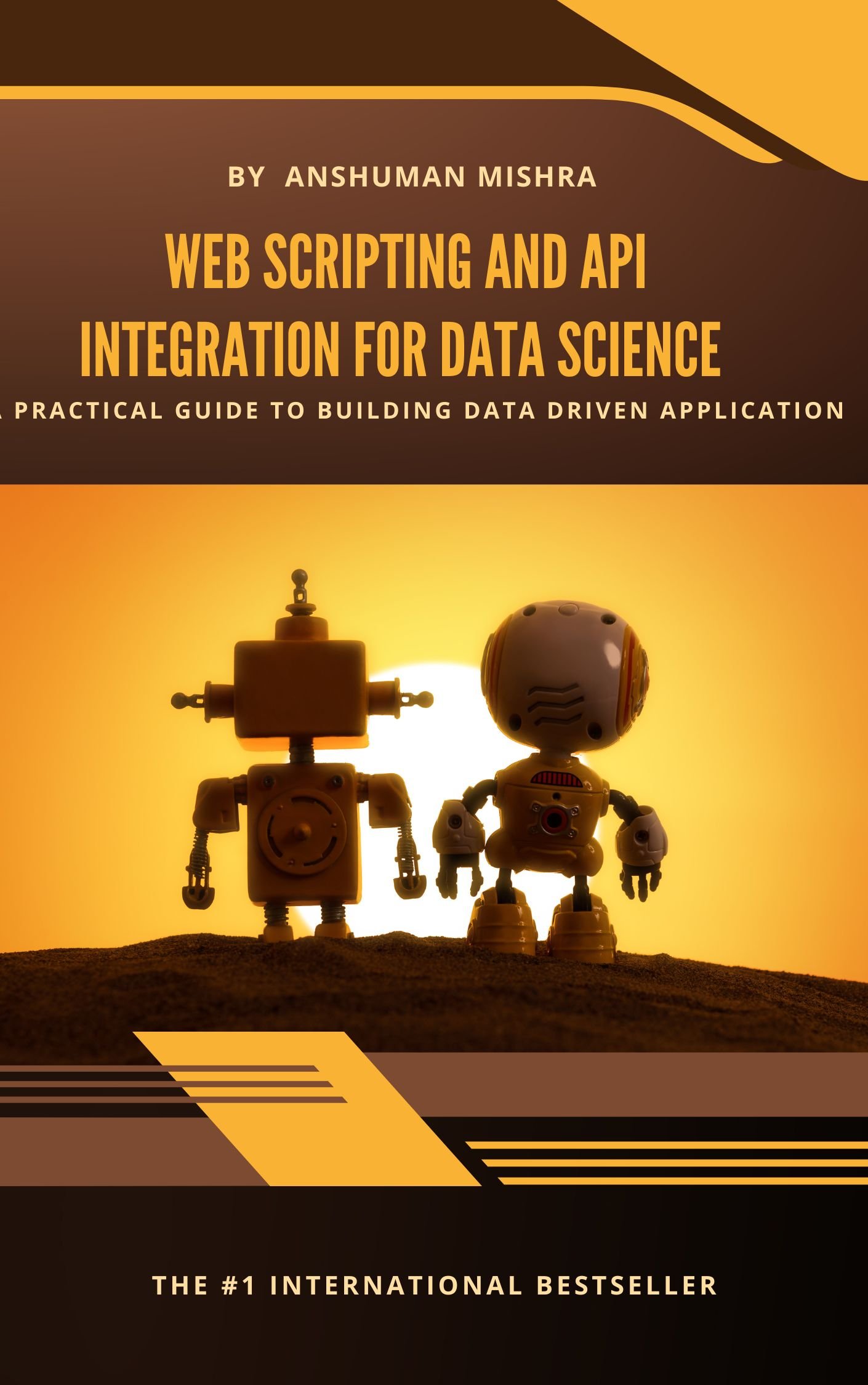
Web Scripting and API Integration for Data Science
A Practical Guide to Building Data-Driven Applications
In today’s data-driven digital ecosystem, data scientists and analysts need much more than statistical and machine learning knowledge.
Modern data is often distributed across websites, APIs, cloud services, databases, social platforms, financial systems, IoT applications, public datasets, and enterprise services.
To work effectively with this constantly changing data, professionals need to know how to access, collect, process, integrate, visualize, automate, and serve data through web technologies.
Web Scripting and API Integration for Data Science: A Practical Guide to Building Data-Driven Applications is designed to provide exactly these skills.
The book creates a practical bridge between web scripting, APIs, data science, automation, visualization, and machine learning, helping readers move from isolated programming knowledge toward complete data-driven applications.
Why Web and API Skills Matter in Data Science
Traditional data science learning often focuses on:
- Statistics
- Machine learning
- Data analysis
- Data visualization
- Model building
But before any model can be trained, useful data must be acquired and prepared.
Much of today’s data is available through web services and APIs.
Examples include:
- Financial market data
- Weather information
- Public datasets
- Social-media data
- Business information
- Healthcare datasets
- E-commerce information
- Government data
- IoT streams
APIs provide structured ways to communicate with these services.
Web scripting provides the programming capabilities required to interact with them.
This book brings both areas together.
From Web Scripting to Data-Driven Applications
The book follows a progressive learning path:
Web Scripting → APIs → Data Collection → Data Processing → Visualization → Automation → Machine Learning Integration → Deployment
Readers begin with the fundamentals of web scripting and gradually progress toward building complete API-powered applications.
The approach is designed to be practical, accessible, and relevant to modern data science workflows.
Part I — Introduction to Web Scripting for Data Science
The first part establishes the programming foundation.
Chapter 1 — Introduction to Web Scripting
Readers learn:
- What web scripting means
- Why web scripting matters to data scientists
- Common scripting languages
- JavaScript
- Python
- PHP
- Client-side scripting
- Server-side scripting
- Development environment setup
The chapter explains how web technologies can become part of a modern data science workflow.
Chapter 2 — JavaScript Fundamentals
JavaScript is one of the most important technologies for web-based data applications.
This chapter introduces:
- JavaScript syntax
- Variables
- Data types
- Operators
- Control structures
- Functions
- Arrays
- Objects
- ES6+ features
The focus is on the JavaScript knowledge needed to interact with APIs and build data-driven web interfaces.
Chapter 3 — Python for Web Scripting
Python is widely used across data science and backend development.
This chapter connects Python programming with web applications through frameworks such as:
- Flask
- Django
Readers explore:
- Python fundamentals
- Server-side scripting
- Routes
- Templates
- Web data interaction
- Running Python scripts for web applications
This creates a natural transition from Python-based data analysis toward web-enabled data applications.
Part II — Working with APIs
APIs form the central theme of the book.
Readers learn how modern software systems communicate and exchange information.
Chapter 4 — Understanding APIs
The book begins by explaining:
What is an API?
Readers learn how APIs act as interfaces between software systems and allow applications to request and exchange data.
The chapter covers:
- REST APIs
- SOAP APIs
- GraphQL
- Data exchange
- API documentation
- Authentication
- Authorization
- API keys
- OAuth
The focus is on practical understanding rather than purely theoretical definitions.
Chapter 5 — RESTful API Concepts and HTTP
REST is one of the most widely used approaches for web APIs.
This chapter introduces:
- REST principles
- HTTP requests
- GET
- POST
- PUT
- DELETE
- PATCH
- HTTP status codes
- URLs
- Query parameters
- Statelessness
- API versioning
Understanding these concepts allows readers to communicate effectively with modern web services.
Chapter 6 — Consuming APIs with JavaScript
Readers learn how JavaScript applications can retrieve information from external services.
Topics include:
- Fetch API
- HTTP requests
- JSON
- XML
- Promises
- Error handling
A practical public-data example demonstrates how an application can retrieve information from an API and process the response.
Chapter 7 — Consuming APIs with Python
Python provides powerful tools for API-based data acquisition.
This chapter introduces the Requests library and explains how to:
- Make HTTP requests
- Retrieve JSON
- Parse API responses
- Handle errors
- Manage exceptions
- Work with public APIs
Examples demonstrate how APIs can provide useful data for analytics and data science workflows.
Chapter 8 — Creating Your Own REST API with Flask
The book then moves from consuming APIs to creating APIs.
Readers learn how to build a simple REST API using Flask.
Topics include:
- Flask fundamentals
- Routes
- HTTP methods
- JSON responses
- API design
- Local deployment
- Cloud deployment concepts
This is particularly useful for data scientists who want to expose datasets or machine learning models through web services.
Part III — Advanced Web Scripting and API Integration
After establishing the fundamentals, the book moves into more advanced concepts.
Chapter 9 — JavaScript Frameworks for Data Interaction
Readers are introduced to the server-side JavaScript ecosystem.
Topics include:
- Node.js
- Express.js
- API servers
- External API integration
- Real-time data
- WebSockets
This chapter helps readers understand how JavaScript can be used beyond browser-based scripting.
Chapter 10 — API Authentication and Security
Accessing APIs also requires responsible security practices.
This chapter introduces:
- API security challenges
- API keys
- OAuth 2.0
- Authentication
- Authorization
- Rate limiting
- Throttling
- Endpoint protection
Security concepts are presented from a practical application-development perspective.
Readers also learn why sensitive credentials should be protected rather than embedded directly in source code.
Chapter 11 — Data Wrangling and Visualization Using APIs
Getting data is only the beginning.
Once API data has been retrieved, it needs to be cleaned, transformed, analyzed, and visualized.
The book demonstrates how API data can be combined with:
JavaScript
- D3.js
- Chart.js
Python
- Pandas
- Matplotlib
- Seaborn
A financial-data case study illustrates how live or retrieved API information can be transformed into meaningful visual insights.
Chapter 12 — Automating Data Collection
Data science workflows often require repeated data collection.
Instead of manually downloading information, scripts can automate the process.
This chapter introduces:
- Web scraping fundamentals
- Puppeteer
- BeautifulSoup
- Selenium
- API pagination
- Rate-limit handling
- Scheduled scripts
- Cron jobs
- Windows Task Scheduler
- Data pipelines
- API-to-database workflows
The emphasis is on responsible and compliant data collection, particularly when working with third-party websites and services.
Part IV — Projects and Real-World Applications
The final section puts the concepts into practice.
Two project-oriented chapters allow learners to integrate the technologies introduced throughout the book.
Project 1 — Building a Data Dashboard Using API Data
Readers learn how to design an API-powered dashboard.
The project workflow includes:
Planning → Data Retrieval → Data Processing → Visualization → API Integration → Deployment
The project combines frontend and backend concepts to demonstrate how external data can become an interactive application.
Project 2 — Creating a Custom Data API for a Machine Learning Model
The second project connects machine learning with web APIs.
Readers explore:
- API interface design
- ML model integration
- Flask
- JSON responses
- API testing
- API documentation
- Deployment concepts
This demonstrates an important real-world workflow:
Machine Learning Model → API → Application → User
Such architectures are commonly used when machine learning models need to provide predictions to other applications.
Best Practices and Future Trends
The final chapter focuses on building maintainable and scalable applications.
Readers explore:
- Clean code
- Maintainability
- Scalability
- API documentation
- Swagger
- Postman
- GraphQL
- Serverless architecture
- AWS Lambda
- Azure Functions
- Real-time APIs
- Event-driven architecture
The chapter also introduces emerging trends that are shaping the future of web-based data systems.
Tools and Technologies Covered
The book provides exposure to a broad modern technology stack.
Programming Languages
- JavaScript
- Python
- PHP
Python Libraries and Frameworks
- Requests
- Flask
- BeautifulSoup
- Selenium
- Pandas
- Matplotlib
- Seaborn
JavaScript Technologies
- ES6+
- Fetch API
- Node.js
- Express.js
- D3.js
- Chart.js
- Puppeteer
- WebSockets
API Technologies
- REST
- SOAP
- GraphQL
- HTTP
- JSON
- XML
- OAuth 2.0
API Development and Testing
- Postman
- Swagger
Deployment Concepts
- Cloud deployment
- AWS Lambda
- Azure Functions
- Serverless architecture
Practical Learning Approach
The book emphasizes learning through application.
Rather than studying web scripting and APIs as isolated topics, readers are encouraged to understand the complete workflow:
1. Find the Data
Identify an appropriate web source or API.
2. Access the Data
Use JavaScript or Python to make requests.
3. Parse the Response
Work with JSON, XML, or other structured formats.
4. Clean and Transform
Prepare the data for analysis.
5. Analyze
Use data science techniques to extract insights.
6. Visualize
Create charts and dashboards.
7. Automate
Schedule repeated data collection and processing.
8. Serve
Expose data or machine learning predictions through APIs.
9. Deploy
Make the application accessible through an appropriate hosting environment.
This end-to-end approach makes the book particularly relevant to practical data science.
Who Should Read This Book?
This book is suitable for:
Data Science Students
BCA, MCA, undergraduate, postgraduate, and certification learners who want to add web and API skills to their data science toolkit.
Aspiring Data Scientists and Analysts
Learners who want to work with live data sources and automate data acquisition.
Software Developers
Developers transitioning into data science or analytics.
Data Engineers
Professionals interested in API-driven data pipelines and automation.
Machine Learning Practitioners
Developers who want to deploy ML models through APIs.
Researchers
Academics who need to collect and automate data from web services for research projects.
Technical Enthusiasts
Learners interested in building data-driven applications and experimenting with public APIs.
What Makes This Book Different?
Data Science Focus
Unlike conventional web development books, this book focuses specifically on how web technologies support data acquisition, analysis, visualization, automation, and machine learning.
Theory + Practice
Concepts are combined with practical examples and project-based learning.
Multi-Language Approach
The book introduces both JavaScript and Python, two important technologies for modern data applications.
API-Centric Learning
REST APIs, HTTP methods, authentication, JSON, API testing, and API development receive substantial attention.
Machine Learning Integration
Readers learn how APIs can be used to expose and consume machine learning models.
Real-World Workflow
The book moves beyond isolated examples and demonstrates how individual technologies fit together into complete applications.
Learning Outcomes
After completing this book, readers can develop the ability to:
- Understand web scripting fundamentals
- Differentiate client-side and server-side scripting
- Work with JavaScript and Python for web applications
- Understand REST, SOAP, and GraphQL APIs
- Use HTTP methods correctly
- Interpret API status codes
- Consume APIs using JavaScript
- Consume APIs using Python
- Work with JSON and XML
- Build REST APIs using Flask
- Understand API authentication
- Explore OAuth 2.0
- Apply basic API security practices
- Handle rate limits and pagination
- Retrieve and process web data
- Perform basic web scraping
- Automate data collection
- Build API-driven visualizations
- Work with data using Pandas and visualization libraries
- Integrate machine learning models with APIs
- Test and document APIs
- Understand cloud and serverless deployment concepts
From Data Scientist to Data Application Builder
A modern data scientist increasingly needs to understand not only how to analyze data, but also where data comes from and how analytical models communicate with other systems.
This book helps bridge that gap.
It connects:
Web Technologies + APIs + Data Engineering + Data Science + Visualization + Machine Learning
The result is a practical learning pathway for building applications that can collect, process, analyze, visualize, automate, and serve data.
Ideal for Academic Projects and Professional Learning
The book can be useful for:
- Data science courses
- BCA and MCA programs
- API programming courses
- Data engineering fundamentals
- Machine learning deployment
- Academic projects
- Final-year projects
- Web-based analytics projects
- Research data collection
- Professional upskilling
Its project-oriented structure also makes it suitable as a reference for learners who want to build their own API-powered data applications.
Final Perspective
The future of data science will not depend only on increasingly sophisticated algorithms.
It will also depend on the ability to connect those algorithms with real-world data and real-world applications.
APIs provide the communication layer.
Web scripting provides the interaction and automation layer.
Data science provides the analytical intelligence.
Machine learning provides predictive capability.
Together, they form the foundation of modern data-driven applications.
Web Scripting and API Integration for Data Science provides a practical pathway for understanding this ecosystem—from basic scripting and API consumption to automation, visualization, machine learning integration, and deployment.
Reviews
There are no reviews yet.