Description
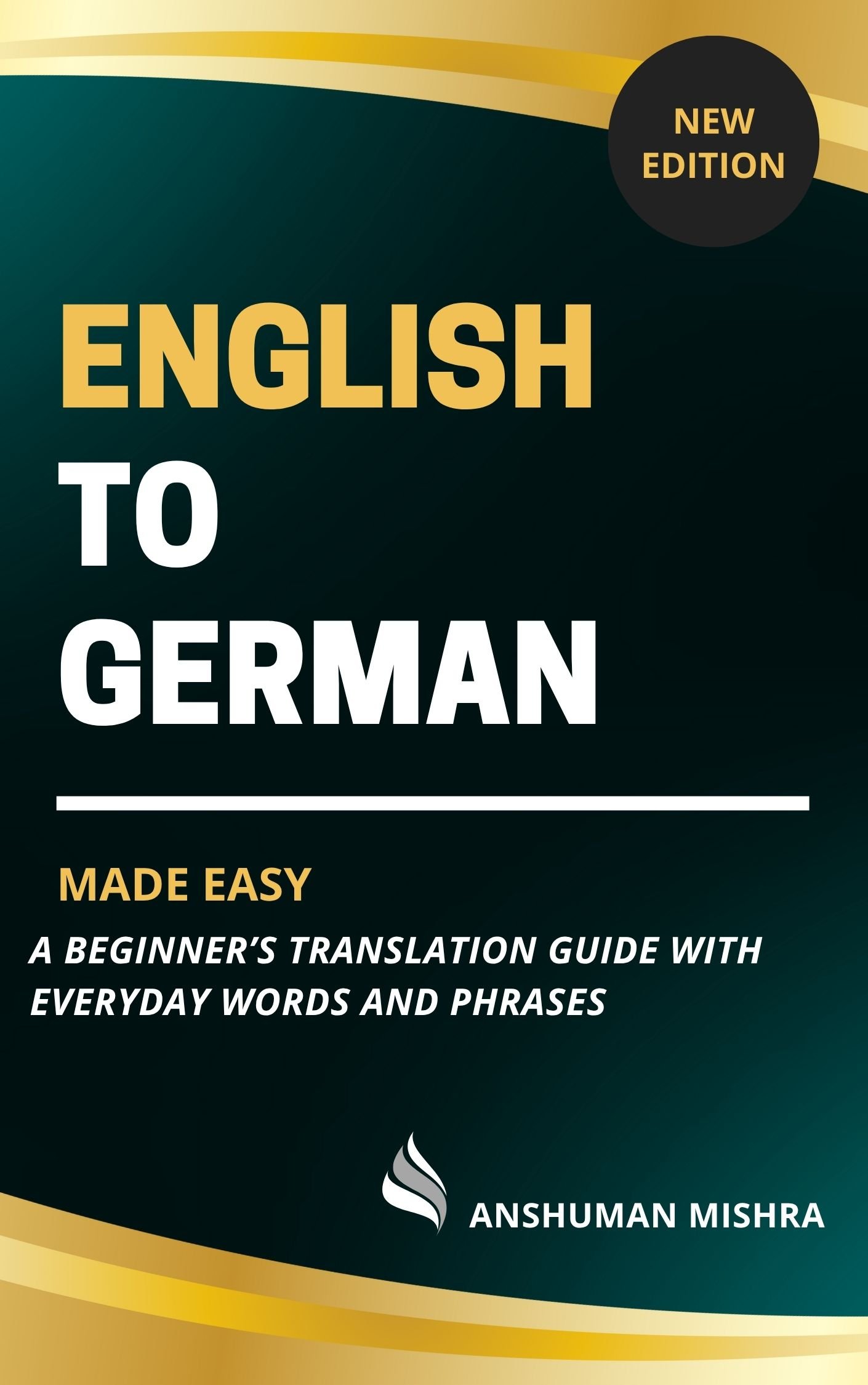
English to German Made Easy
A Beginner’s Translation Guide with Everyday Words and Phrases
Learning a new language can open doors to new cultures, educational opportunities, travel experiences, professional possibilities, and meaningful communication. German is one of Europe’s most widely spoken languages and is particularly valuable for students, travelers, professionals, and anyone interested in German-speaking countries.
English to German Made Easy: A Beginner’s Translation Guide with Everyday Words and Phrases is designed to make the first steps into German simple, practical, and enjoyable.
Rather than overwhelming beginners with complicated grammatical terminology, this book takes a real-world, English-to-German translation approach. It focuses on frequently used words, practical expressions, everyday situations, basic sentence structures, pronunciation guidance, and short conversations.
The goal is simple: help beginners understand common German vocabulary and begin using useful German expressions in everyday situations.
What You Will Learn
This book provides a structured introduction to German, covering:
- German alphabet and pronunciation
- Essential German vocabulary
- Basic grammar concepts
- Nouns and German articles
- Personal pronouns
- Common verbs
- Greetings and introductions
- Numbers and counting
- Time, dates, days, and months
- Family and people
- Household vocabulary
- Food and drinks
- Restaurant conversations
- Shopping and money
- Clothes and sizes
- Travel and transportation
- Airport and railway vocabulary
- Asking for directions
- Health and emergency vocabulary
- Weather and nature
- Common everyday expressions
- Short German conversations
- English-to-German translations
- Practical language-learning strategies
A Practical Approach to Learning German
The book is structured to help beginners gradually build their vocabulary and confidence.
Readers begin with fundamental concepts such as the alphabet and pronunciation before moving into everyday words and expressions. As the book progresses, learners encounter increasingly practical situations that they may experience while traveling, studying, shopping, working, or communicating with German speakers.
The English-to-German format allows learners to quickly connect familiar English meanings with their German equivalents.
Chapter-Wise Coverage
Introduction: Getting Started with German
The introductory section explains why learning German can be valuable and how beginners can make the most of the book. It also introduces basic pronunciation guidance to help learners begin speaking German more confidently.
Chapter 1: The German Alphabet and Pronunciation
Learn the German alphabet from A–Z along with vowel sounds and common pronunciation rules. The chapter provides an essential foundation for reading and speaking German words.
Chapter 2: Basic Grammar Overview
This chapter introduces fundamental German grammar concepts, including nouns, articles such as der, die, and das, plural forms, personal pronouns, and basic verb conjugation.
The objective is not to overwhelm beginners with advanced grammar, but to provide enough understanding to construct and recognize simple German sentences.
Chapter 3: Greetings and Introductions
Learn useful expressions for meeting people and starting conversations.
Topics include:
- Hello and goodbye
- Asking someone’s name
- Introducing yourself
- Common social expressions
- Basic polite phrases
Chapter 4: Numbers, Time, and Dates
Numbers are essential for everyday communication. This chapter covers counting, telling time, days of the week, months, seasons, and common date-related expressions.
Chapter 5: Common Verbs and Everyday Actions
Verbs form the foundation of communication. This chapter introduces frequently used German verbs related to activities such as going, eating, sleeping, working, speaking, reading, and more.
English-to-German verb tables make revision easier for beginners.
Chapter 6: Family and People
Learn vocabulary related to family members, people, occupations, and basic descriptions.
The chapter helps learners talk about themselves and the people around them using simple German vocabulary.
Chapter 7: Around the House
This chapter introduces useful household vocabulary covering rooms, furniture, kitchen items, and common objects found around the home.
Chapter 8: Food and Drink
Learn how to talk about common foods and drinks and communicate in restaurant situations.
Topics include ordering food, asking questions, requesting items, and paying the bill.
Chapter 9: Shopping and Money
This chapter prepares learners for everyday shopping situations.
Readers learn expressions for asking prices, discussing sizes, identifying clothing, shopping at stores and supermarkets, and handling basic money-related conversations.
Chapter 10: Travel and Transportation
Travelers will find practical vocabulary for airports, railway stations, tickets, transportation, directions, and asking for help when navigating unfamiliar places.
Chapter 11: Health and Emergencies
This chapter introduces basic health and emergency vocabulary that can be useful when communicating with doctors, medical staff, or emergency services.
The focus is on simple, practical expressions that beginners can understand and remember.
Chapter 12: Weather and Nature
Learn everyday expressions related to weather, seasons, nature, and common environmental conditions.
These are useful for casual conversations and everyday communication.
Chapter 13: Common Phrases for Daily Use
This chapter focuses on expressions that beginners can use frequently, including:
- Yes and no
- Please and thank you
- Asking questions
- Apologies
- Common responses
- Everyday expressions
Chapter 14: Short Conversations
The final chapter brings together vocabulary and phrases through short dialogues.
Readers can practice simple conversations involving greetings, shopping, everyday interactions, and other common situations.
Key Features of the Book
Beginner-Friendly Language
The book avoids unnecessary complexity and introduces German gradually, making it suitable for complete beginners.
English-to-German Format
Side-by-side translations help readers quickly connect English meanings with German words and phrases.
Practical Vocabulary
Instead of focusing primarily on rare or complicated words, the book emphasizes vocabulary that beginners are likely to encounter in everyday situations.
Real-Life Situations
Shopping, travel, restaurants, introductions, household activities, health situations, and everyday conversations make the learning experience practical.
Pronunciation Support
Basic pronunciation guidance helps learners develop confidence in reading and speaking German.
Short Conversations
Dialogues provide opportunities to see vocabulary and phrases in context rather than learning isolated words alone.
Progressive Learning
The content moves from foundational concepts toward practical conversations, allowing learners to build knowledge step by step.
Quick Reference
The vocabulary-focused structure makes the book useful as a reference guide when learners need to quickly find common German words and expressions.
Who Is This Book For?
This book is ideal for:
- Complete beginners learning German
- Students studying German
- Travelers visiting Germany
- Tourists visiting German-speaking countries
- Self-learners
- Language-learning enthusiasts
- Professionals preparing to work with German speakers
- Students preparing for basic German communication
- People relocating to German-speaking regions
- Parents and learners looking for simple German vocabulary
- Teachers seeking beginner-friendly supplementary material
- Anyone interested in English-to-German translation
Perfect For Travel and Everyday Communication
Whether you are preparing for a trip, starting a German course, communicating with German-speaking people, or simply exploring a new language, this guide focuses on practical communication.
You can use the book to learn expressions for:
Meeting People → Shopping → Restaurants → Transportation → Directions → Home → Family → Weather → Health → Everyday Conversations
Build Your German Vocabulary Step by Step
Learning a language does not require memorizing thousands of words at once. A strong foundation can be built by learning useful vocabulary, understanding common sentence patterns, practicing pronunciation, and repeatedly using words in meaningful situations.
English to German Made Easy follows exactly this approach.
The book encourages learners to practice regularly, review vocabulary, create their own sentences, use flashcards, listen to German, watch German-language content, and interact with German speakers whenever possible.
It can be used independently or alongside a classroom course, language-learning application, or other German-language resources.
Why Learn German?
German can be useful for education, travel, professional communication, cultural exploration, and personal development. German-speaking regions are associated with important contributions to science, engineering, technology, philosophy, literature, music, business, and research.
Learning German can therefore provide more than the ability to communicate—it can provide greater access to a rich cultural and intellectual world.
Start With Simple Words. Build Real Confidence.
You do not need to know advanced grammar before beginning to communicate. Start with Hallo, learn useful expressions, practice pronunciation, build your vocabulary, and gradually develop your ability to understand and form German sentences.
English to German Made Easy: A Beginner’s Translation Guide with Everyday Words and Phrases is designed to be a practical companion throughout those first steps.
Whether you are learning German for travel, education, work, personal interest, or everyday communication, this book provides a simple and accessible starting point for your language-learning journey.


Reviews
There are no reviews yet.